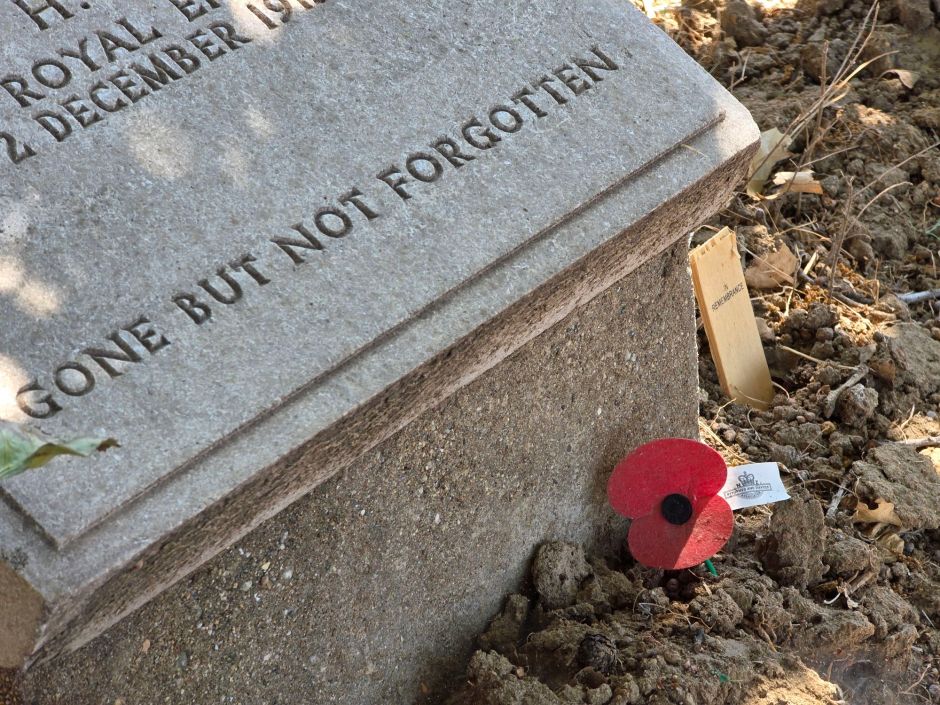
A Piece Of Our Fabric
July 2026
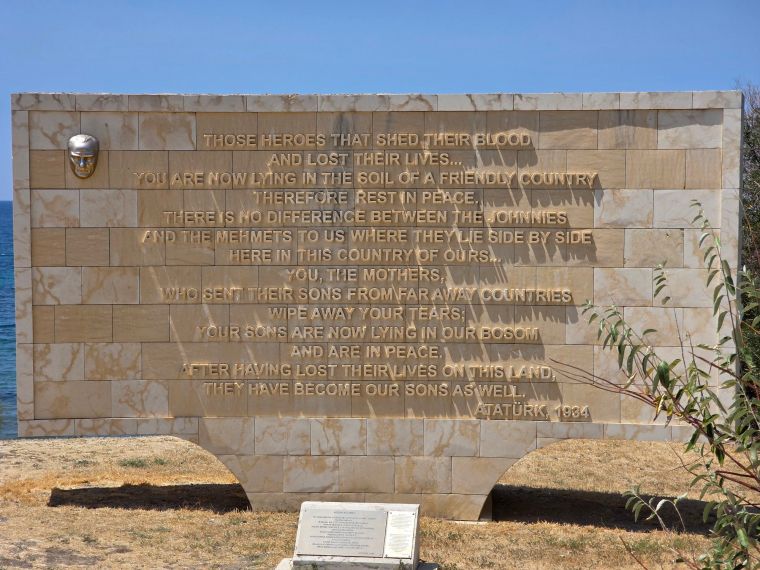
“Those heroes that shed their blood and lost their lives… You are now lying in the soil of a friendly country. Therefore rest in peace. There is no difference between the Johnnies and the Mehmets to us where they lie side by side here in this country of ours… You, the mothers who sent their sons from faraway countries, wipe away your tears; your sons are now lying in our bosom and are in peace. After having lost their lives on this land they have become our sons as well.”
The Gallipoli Landing, known by the Turkish as the Battle of Canakkale
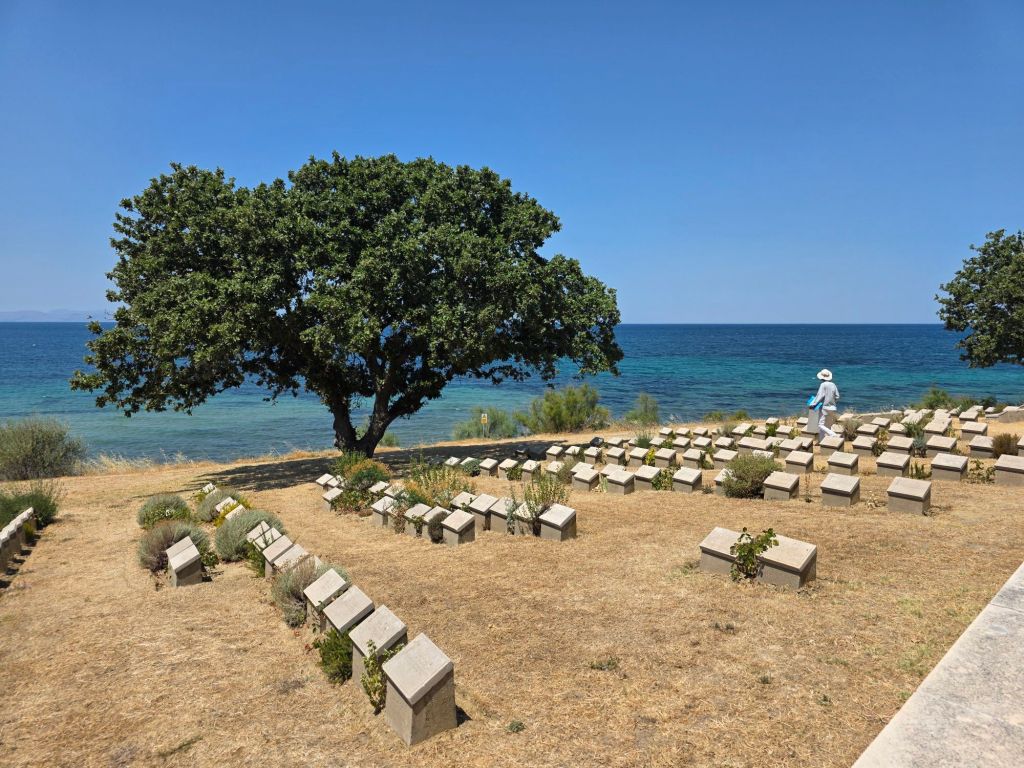
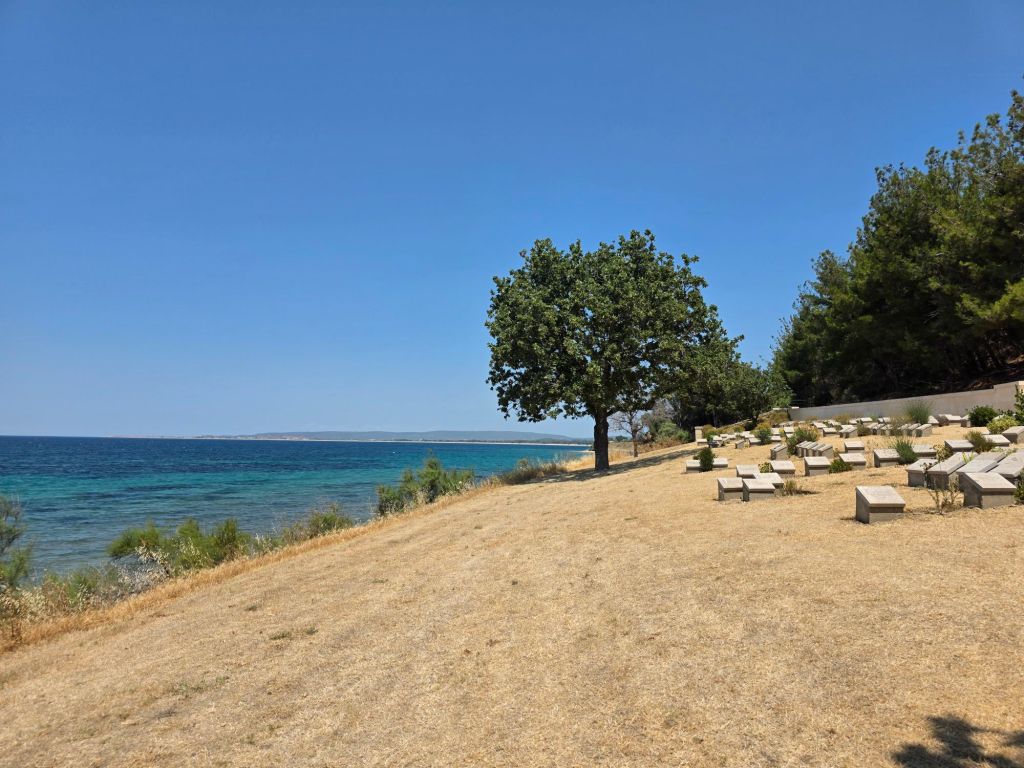

We started off at Beach cemetery. On the shores of the crystal clear, sparkling water of the Agean Sea. It struck me how like Greece it was. Which is a dumb thing to think as we we are in Turkey, so close to Greece and not all that far from our favourite island of Leros. The terrain is all very similar, rugged and crumbly, in beautiful way.
Our guide pointed out 2 islands in the distance. Only about 30km away was Imbros. In 1915 this was part of Greece and was where the operations of Allied forces was based. General Sir Ian Hamilton ran the campaign from a tent city right there, you can see the island quite clearly. Imbros became part of Turkey in 1923.
I could only just see the other island as a haze on the horizon, Lemnos, a bit further south. This was the ANZAC Base and Hospital. New Zealand and Australian nurses were based there in massive tent hospitals, tending to the wounded who were evacuated from the beaches. There are Commonwealth war cemeteries there. We always think of ANZAC cove and the Gallipoli peninsular as being the main “place” for this campaign. But Imbros and Lemnos were a big part of the picture too. I would like to visit Lemnos one day. I read somewhere the soldiers would say “Imbros, Lemnos and Chaos” funny but tragic really.
Greece offered these islands to the Allies to use as a staging ground for the campaign and the natural deep, sheltered Murdos Harbour, on Lemnos, was where 200 ships gathered before sailing out for the dawn landings on 25th April 1915.
Standing here at Beach cemetery feels surreal. We saw pictures of how it looked during the landings and days following. We compared the pictures to what we were looking at today. The terrain is the same, the unforgiving slopes and the ridge line is the same. Chunuk Bair is just up there, the “objective”, the highest point between us and the Dardanelles. What the soldiers endured during those months is hard to imagine, standing here on this beautiful, peaceful day.

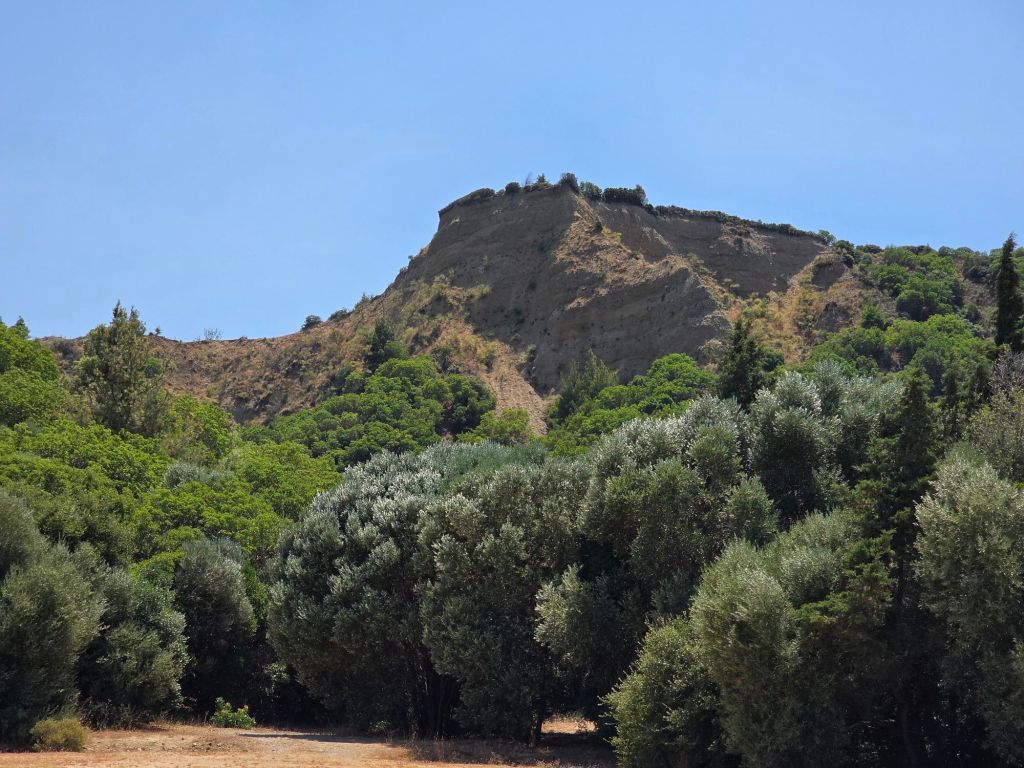

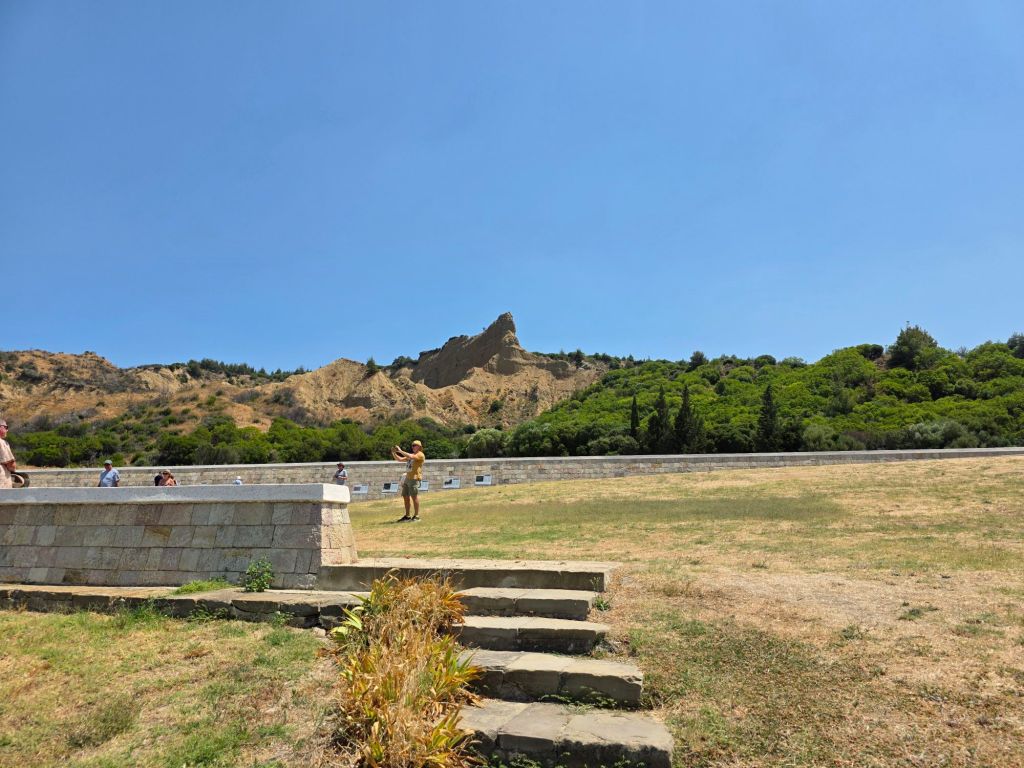
We followed the road to ANZAC bay, the place where every year on 25th April there is a ceremony to commemorate the birth of the ANZAC tradition and to honour the fallen. It is not a large place when you see it in the flesh, it looks a lot bigger on TV.


We travelled up the hill towards Lone Pine, stopping at the Monument of Respect. The monument shows a Turkish soldier carrying an Australian soldier back to his trenches.
The sculpture is based on an event where a Turkish soldier, after raising a white flag, carried a wounded Australian officer back to Australian lines. He returned to his own lines and fighting started again.

We were told of the 9 hour truce which happened on 24th May where both sides put down their guns and were able to collect their dead which were piling up after the failed Turkish assault on 19th May. It has been told that the soldiers met in this no-mans-land and talked to each other. They shook hands and shared cigarettes. They found their enemies were just men, people just like them, just doing their jobs. This forged a great respect both ways. It was at this point that the Allies started calling the Turkish Soldiers “Johnny Turk” instead of “Abdul”. The Turks took this as a show of great respect….. And then the fighting started again.
Lone Pine is a beautifully kept cemetery. What struck me here was the story of the under aged soldiers. The ones who wanted to go to war but were too young to enlist. They lied about their age. If their parents found out, they could force the army to discharge them, so they also changed their names. This made the record keeping impossible if they were killed in battle. Their true identities were often discovered later through letters, comrades, or grieving families contacting the base records office. So we see some of the headstones have “served as” or “true name” So heart breaking. The youngest to have served was only 14 years and 9 months old when he died.


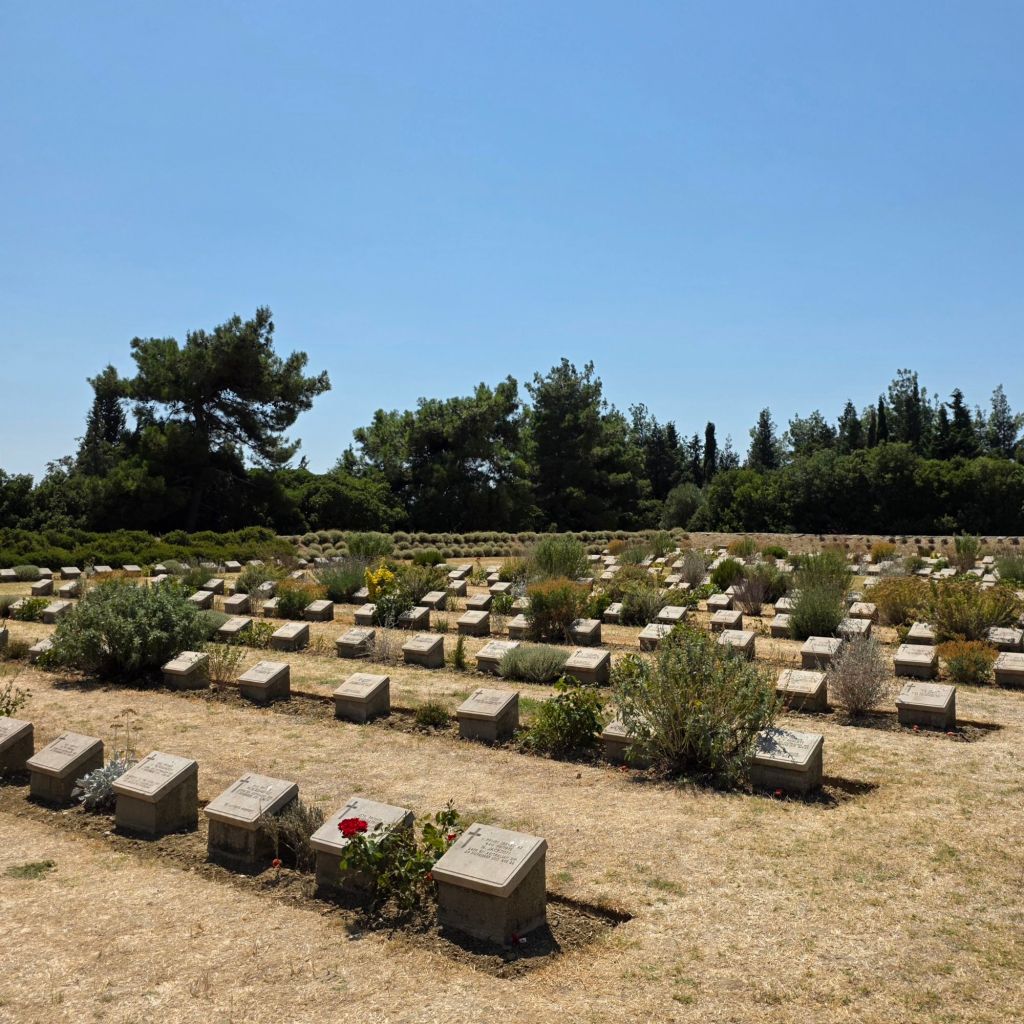
We carried on up the road to the Turkish cemetery and memorial which honours the 57th Regiment. It was explained how back in the day the Turkish did not have sir names. They were named by their fathers and their birth place. So record keeping was a mission. It was the 57th Regiment who were ordered by Mustafa Kemal “I don’t order you to attack, I order you to die” And sadly, this happened. The 57th regiment was completely wiped out. The Turkish army has chosen not to replace it, there has not been a 57th regiment since.

Right here was the narrowest point between the opposing sides trenches. Only 10 metres separated them. I found this to be incredible. To stand right here, on the no-mans-land, all of 10 metres wide. They were so close to each other. Apparently they could hear each other talking.
The last stop for the day was Chunuk Bair and the New Zealand Memorial. There is still evidence of trenches here and looking out you can see the island of Imbros quite clearly.


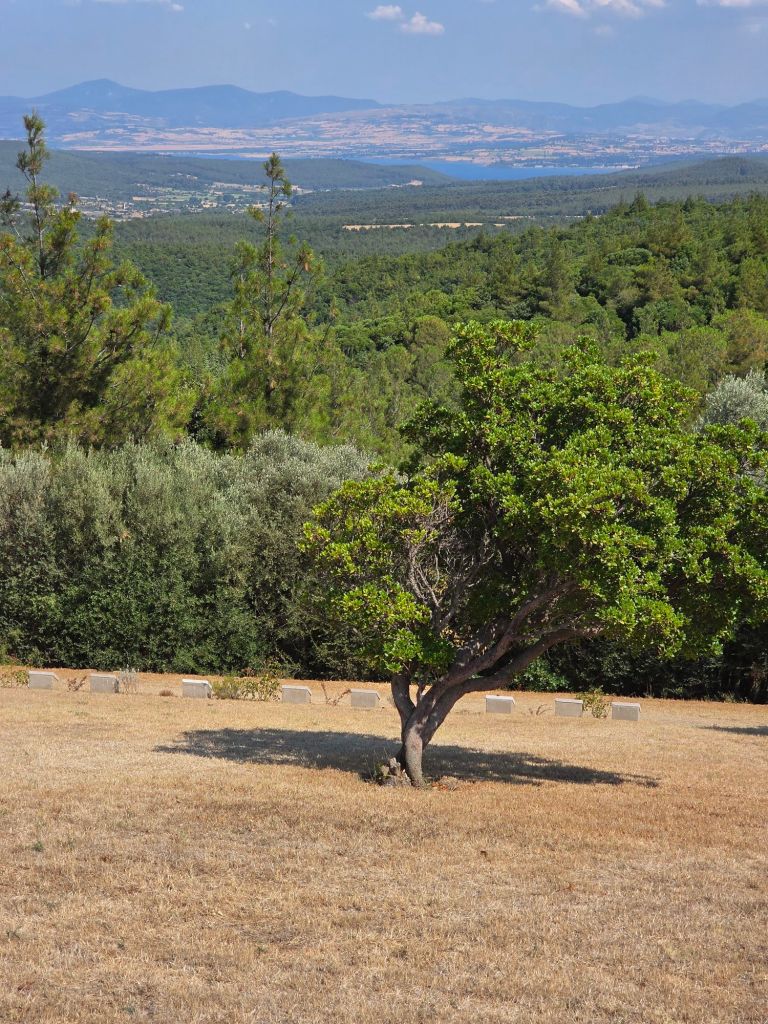

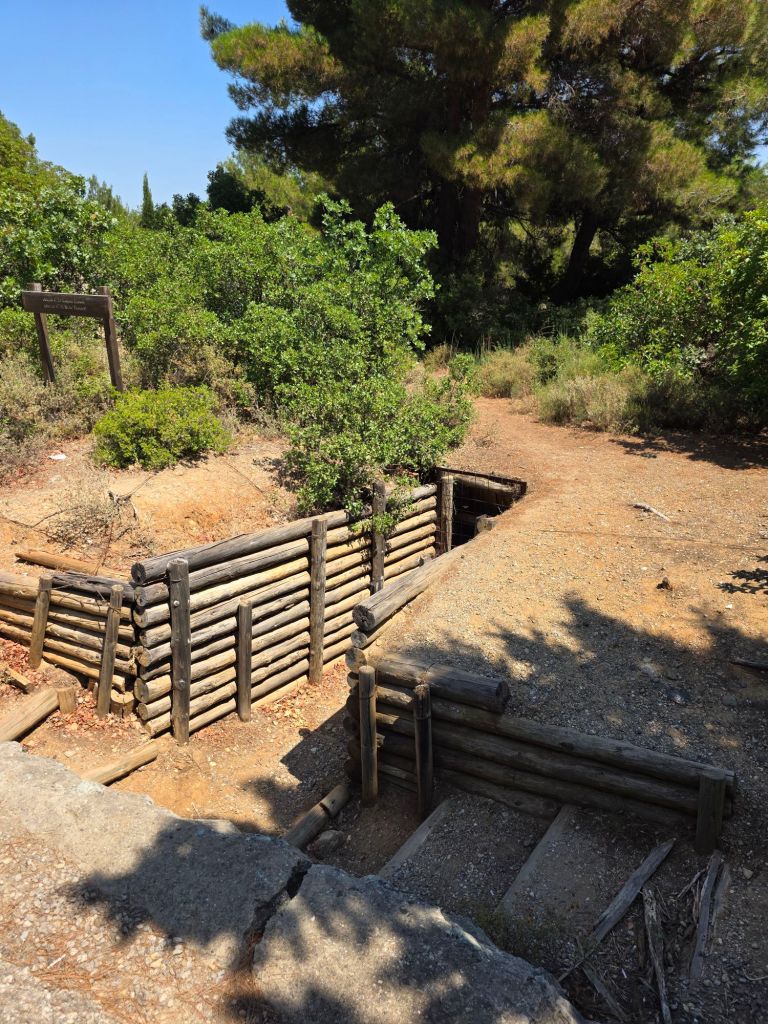
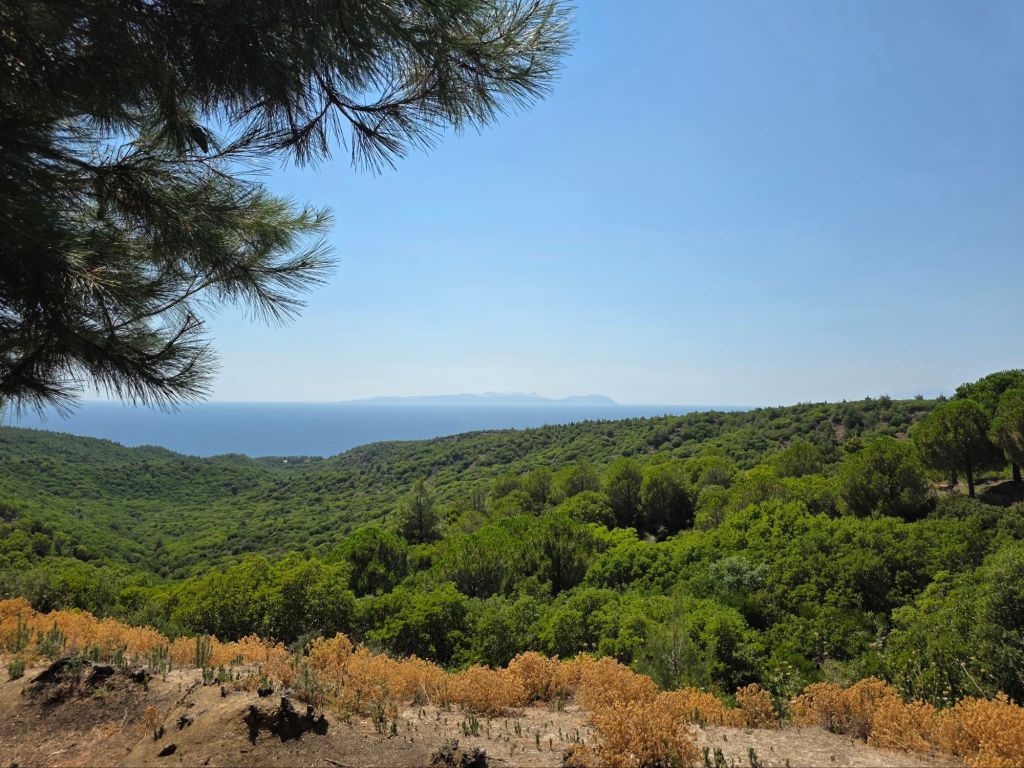
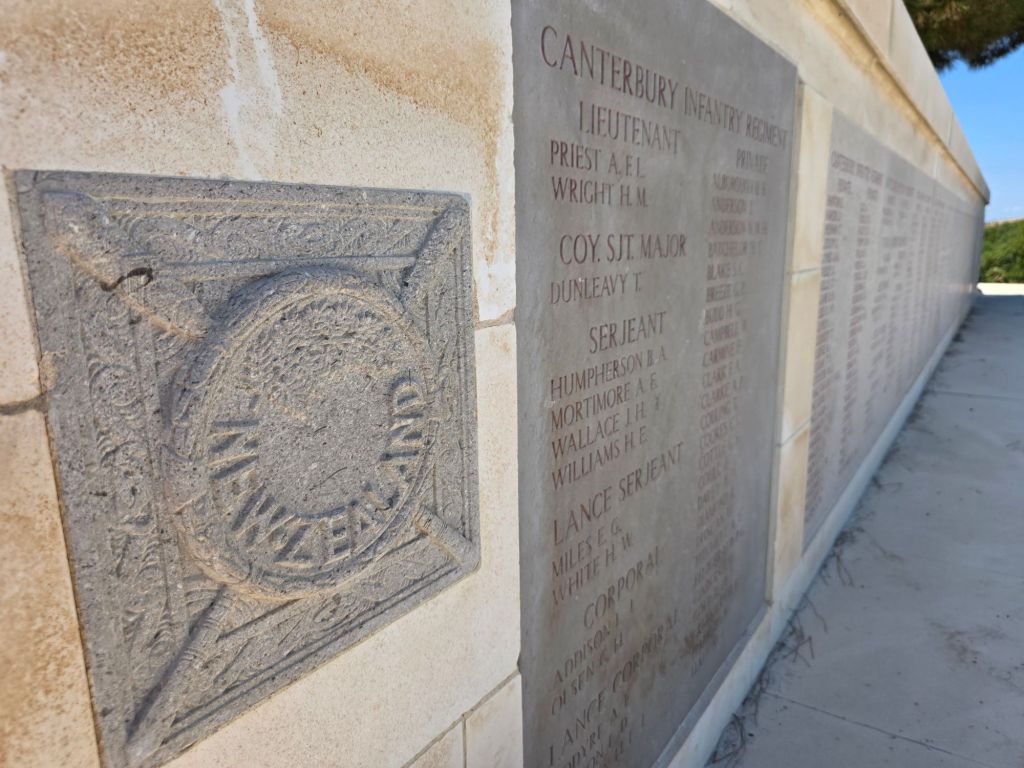
It was right here on this spot where Lieutenant Colonel William Malone, of the Wellington Infantry Battalion, successfully led the ferocious assault to capture Chunuk Bair. And where, tragically, he was killed by friendly fire. Standing here looking down toward the coast, where the troops had to navigate this merciless climb is beyond imaginable.
So many deaths. So much blood spilled on this soil under my feet. I can’t imagine what it could have been like back then, the brutal conditions, the fear they must all have been facing. The sheer exhaustion and frustration; while I stand here on this stunning summer day, without a care in the world. The campaign went on for so long, they put up with the oppressive heat of summer as well and the freezing conditions of winter. Diseases were rife, they were facing extreme conditions, as well as the chance of death by enemy bullets.

The commonwealth War Graves Commission do a wonderful job of keeping all the cemeteries pristine. Our guide told us that you will never see and vandalization or disrespect from the Turkish people. They hold the whole area in the utmost reverence. Every Turkish person will visit the site at least once in their lives. It is a homage for them to pay respects to a huge part of their history. They understand and acknowledge the sacrifice loss from the Allies, as well as their own. They know that life would have been so much different now if they had lost this campaign.
A very emotional, moving day. This is such a huge part of our identity, the failed campaign that earned the respect of the Turks. To hear the stories and be standing in the same place makes it all very real. This beautiful and now tranquil land, so bravely fought over. For us, visiting this sacred ground has put a huge piece of the ANZAC jigsaw into place.
A big thank you to the Commonwealth War Graves Commission and the people of Canakkale.
And, Thank you for reading our story


Beautifully written.
Lest we forget.
LikeLike