France and Belgium April/May 2026
We are taking things a little slower and changing things up a bit. A little less housesitting, and a bit more directed towards a wish list. We have talked about a canal boat trip somewhere in Europe for a few years now. About a year ago we booked this bucket-list trip and now finally the day has arrived.
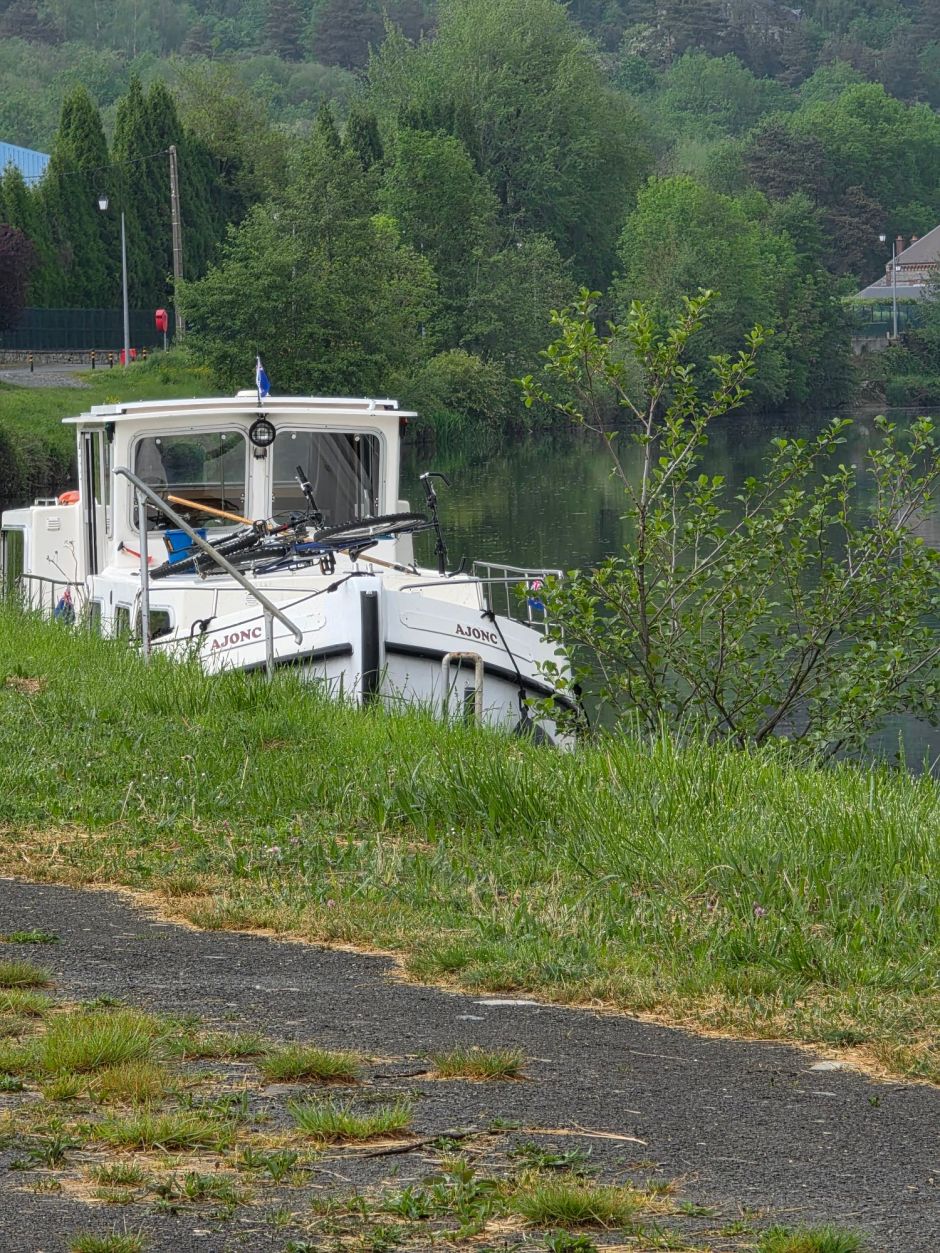
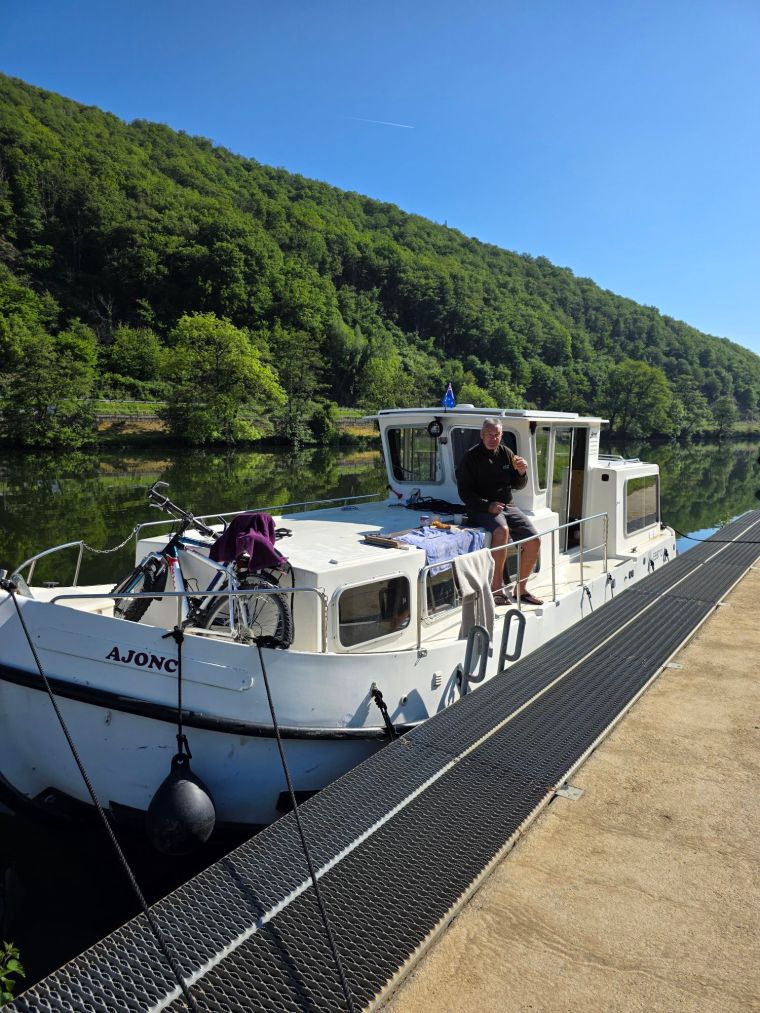
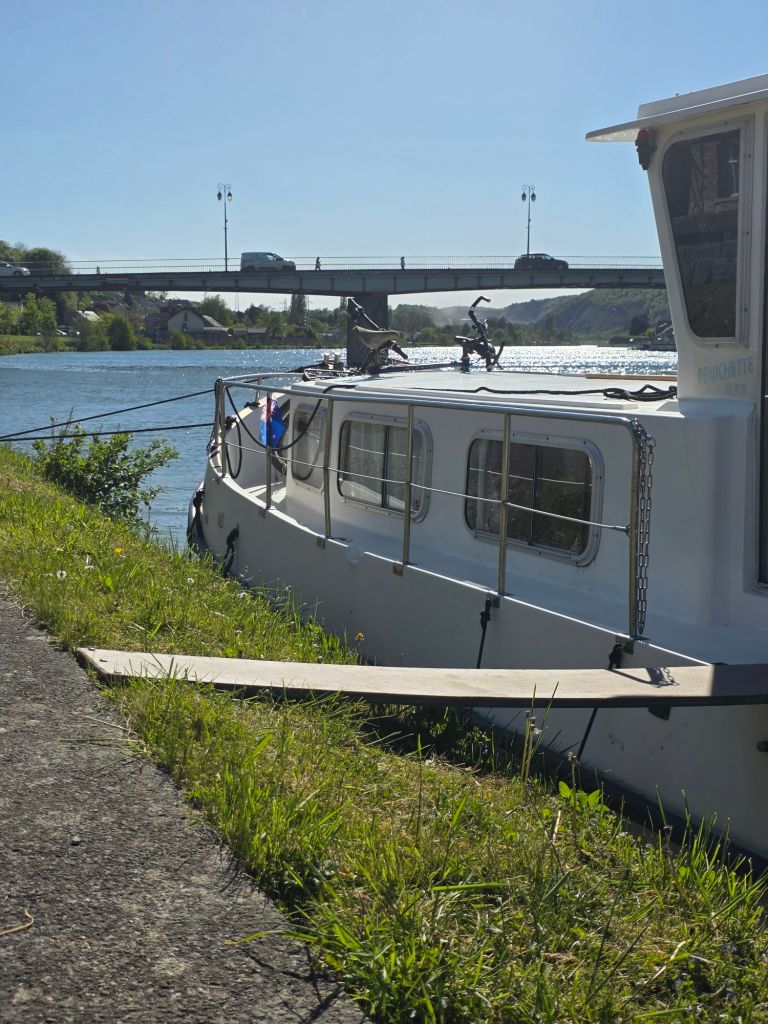
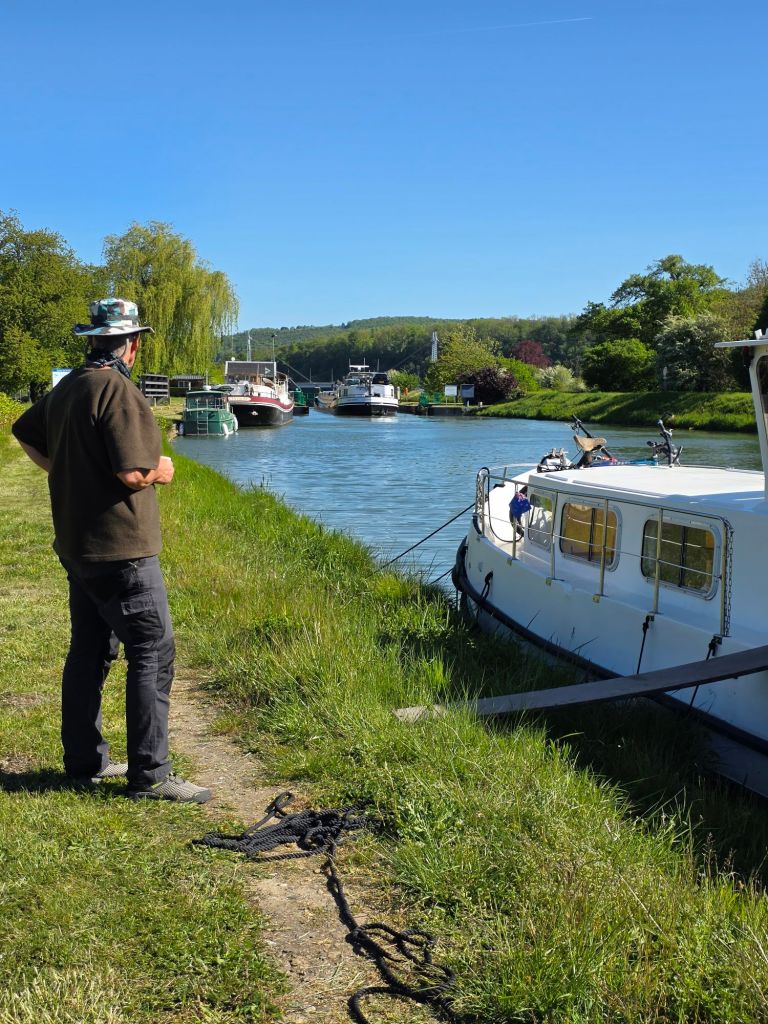
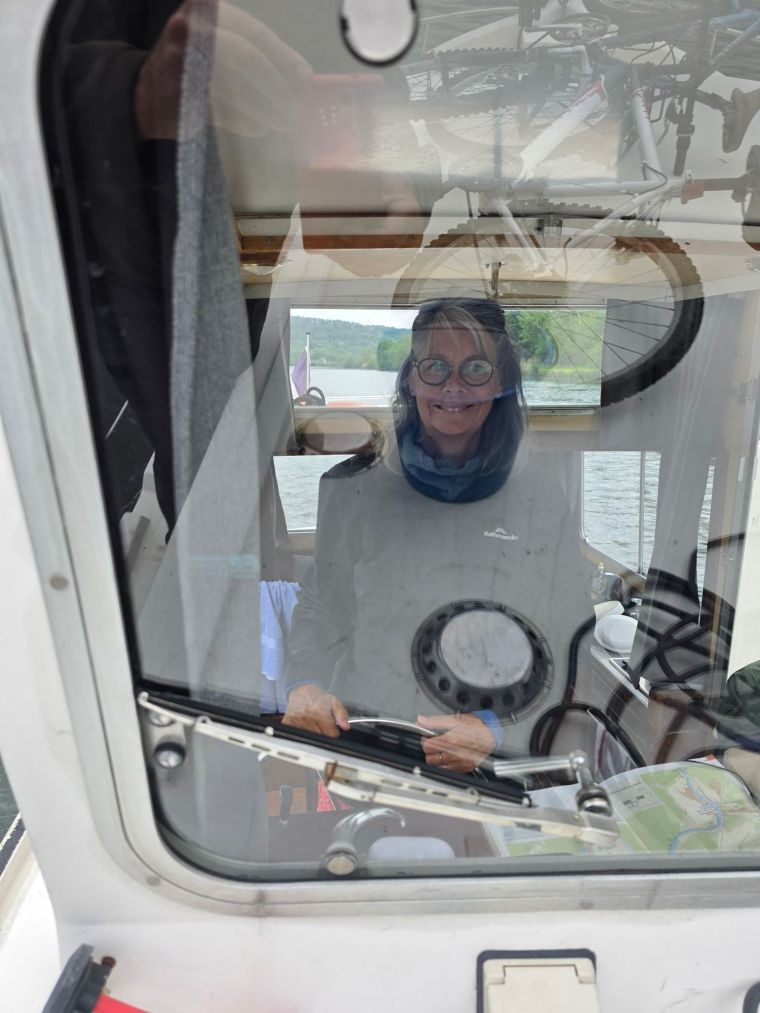
We arrived at Pont-a-bar in the Ardennes region of France where we were introduced to our home-upon-the-water. She is a beauty, 9.3 metres Penichette, 30hp Volvo engine; we will be very comfortable here. The weather is stunning, blue sky and balmy temperatures. We anticipate 21 awesome days ahead of us.
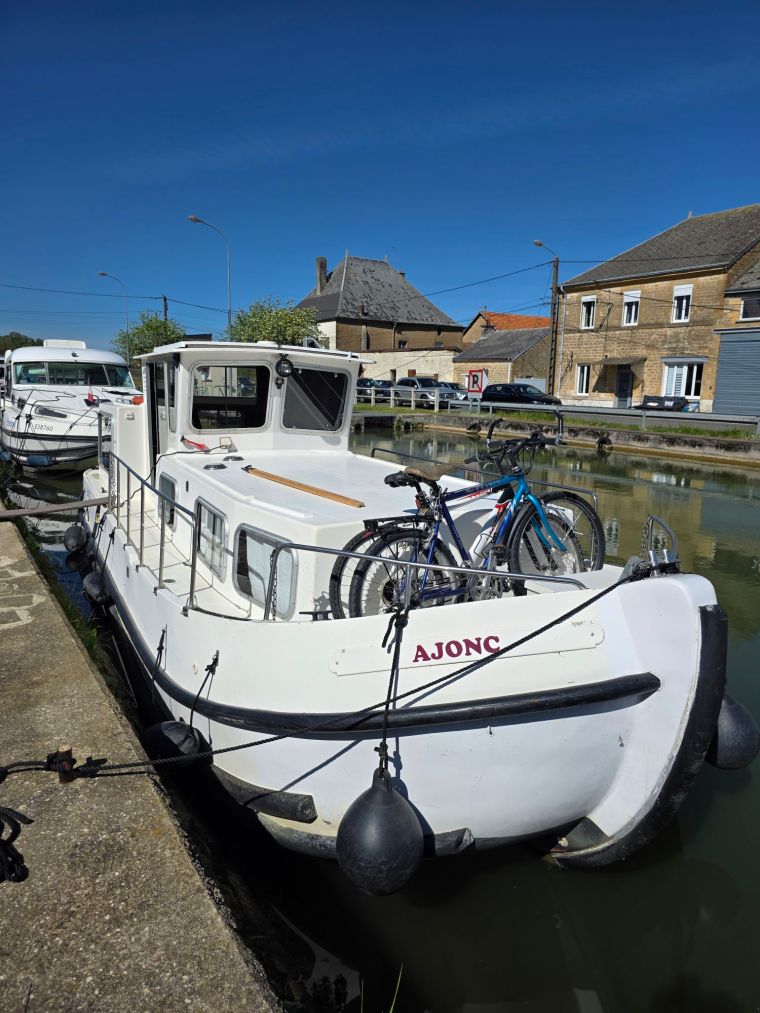
On arrival at Pont-a-Bar the owner was very excited that we had the boat for 3 weeks, not the usual around here. She was also very excited as there was a couple from New Zealand here getting their boat ready for the season. We were introduced. After talking for a bit we realised that they were from Australia. It always amazes me how sometimes people from up this end of the world have absolutely no idea of the geography past the equator. We really enjoyed their company and managed to polish off a couple of drinks onboard our wee home. It was great to get their “local knowledge” of the river Meuse and the area we were planning to travel to as they have been sailing this area for a few years now.
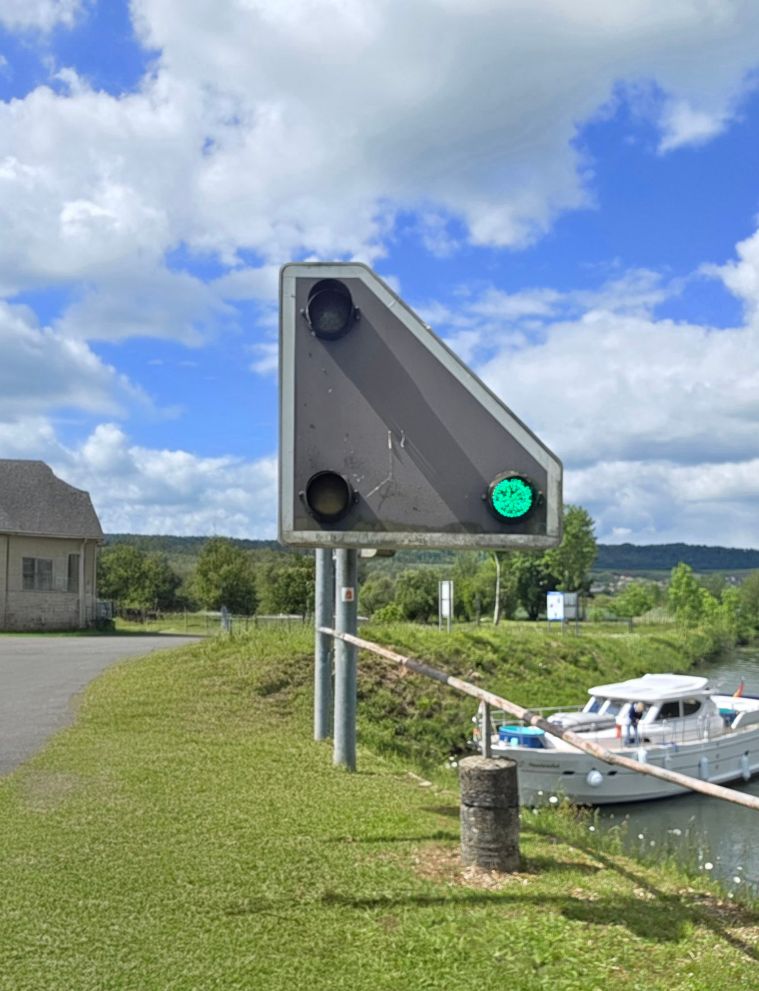
We had a lesson on how to get up and down the locks the next morning, then headed up the Canal des Ardennes – see you in 3 weeks! There is a 3 light system for the locks, green and red sequences which mean different things. Our very first lock solo was 2 red lights. Oh, what was that again? We had to look up our guide to discover it means that the lock is out of service. What a start! So, we turned around and steamed right back past the starting point and the Aussies, and off to the river Meuse instead.
It was a fantastic 3 weeks. We travelled 272 kilometres, navigated locks 62 times and 2 tunnels in both directions. The boat preformed beautifully. We plodded along at around 6 knots. Originally we wanted to do a circuit, ie not go over the same ground twice. We are so glad we took the advice not to, as we would have had to be travelling about 5 hours every day to get around. We travelled down river toward Belgium and turned around at Profondeville. We were able to really take our time and some days we didn’t leave the dock. It was surprising how different things looked from the other direction.
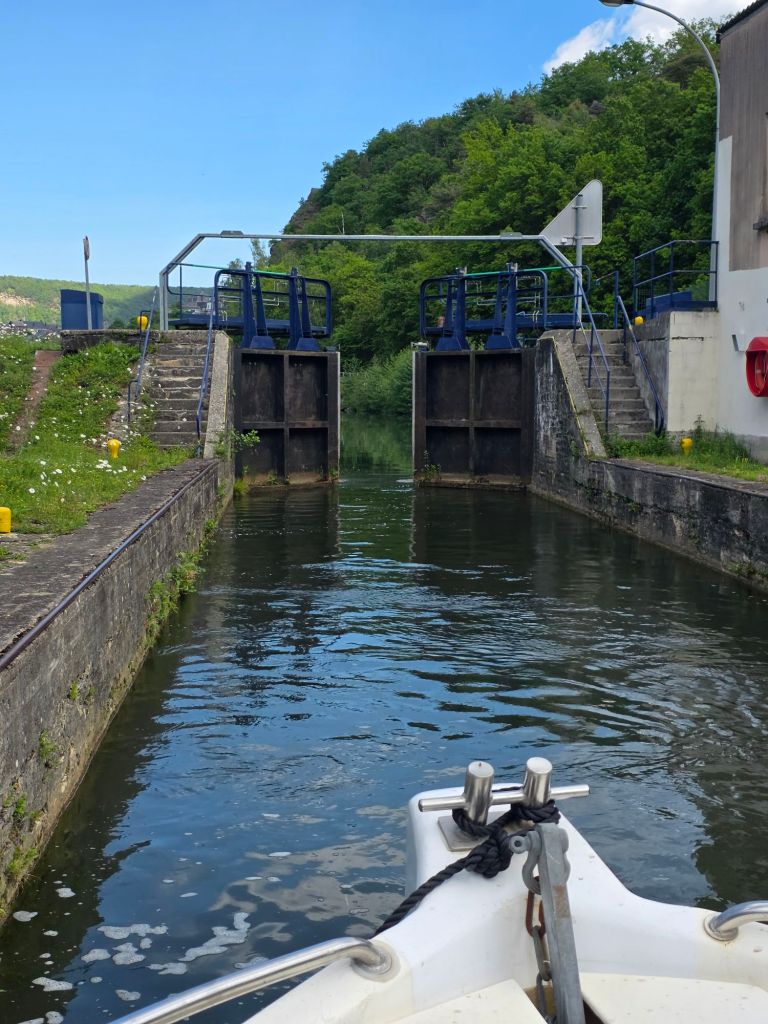
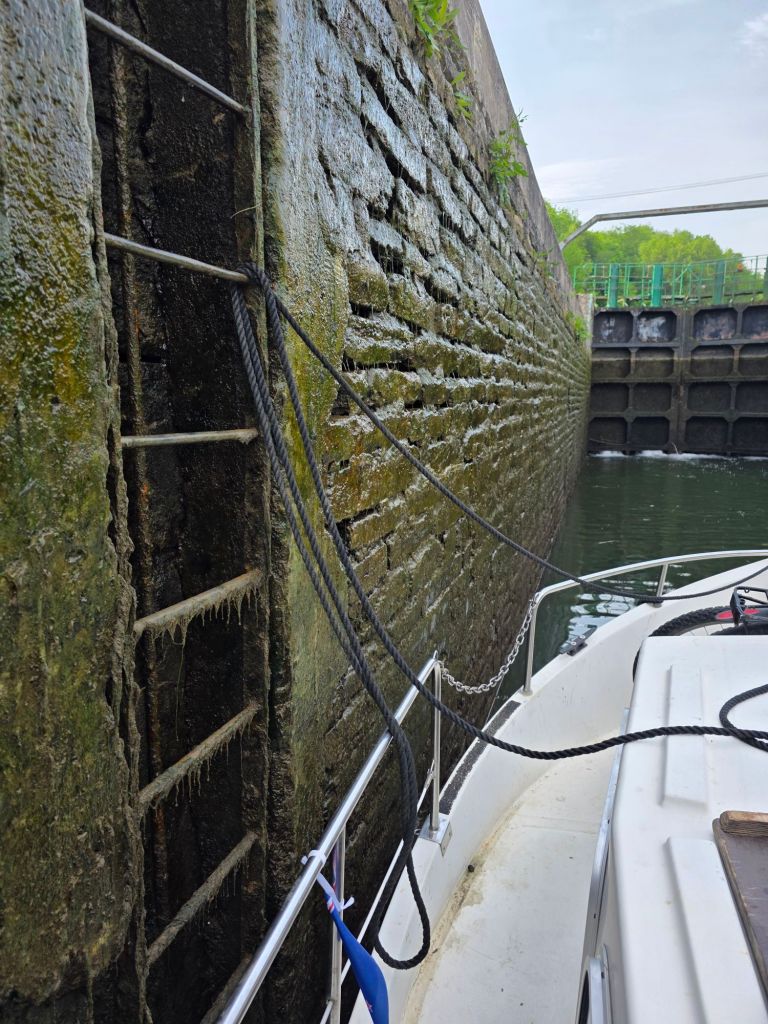
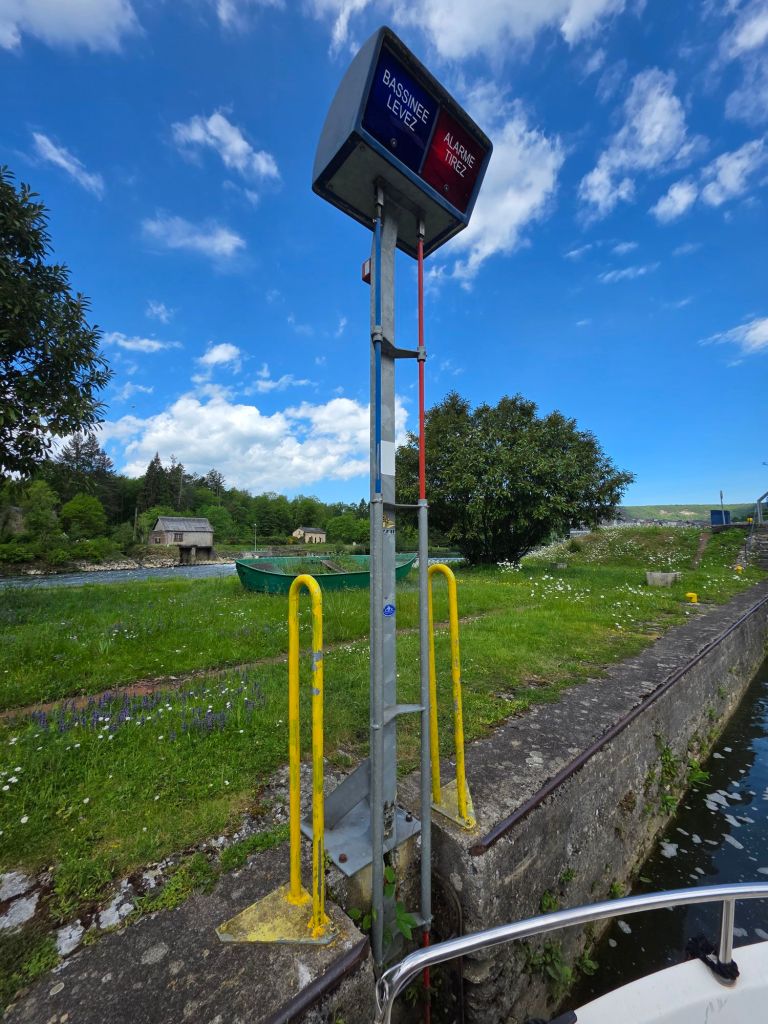
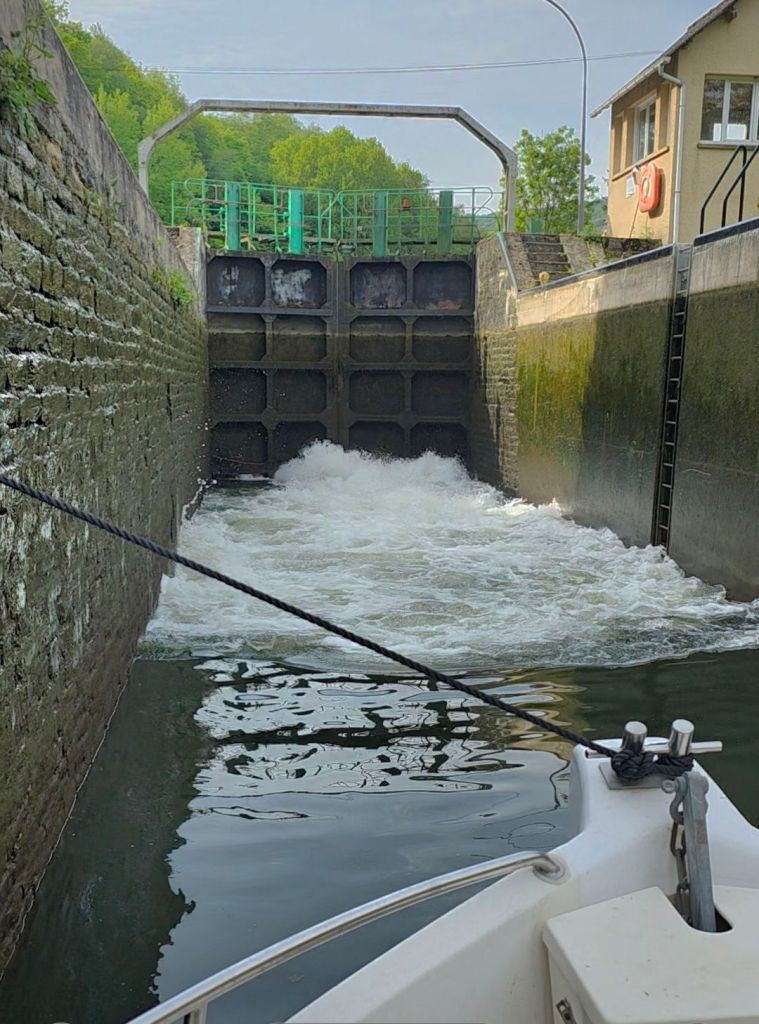
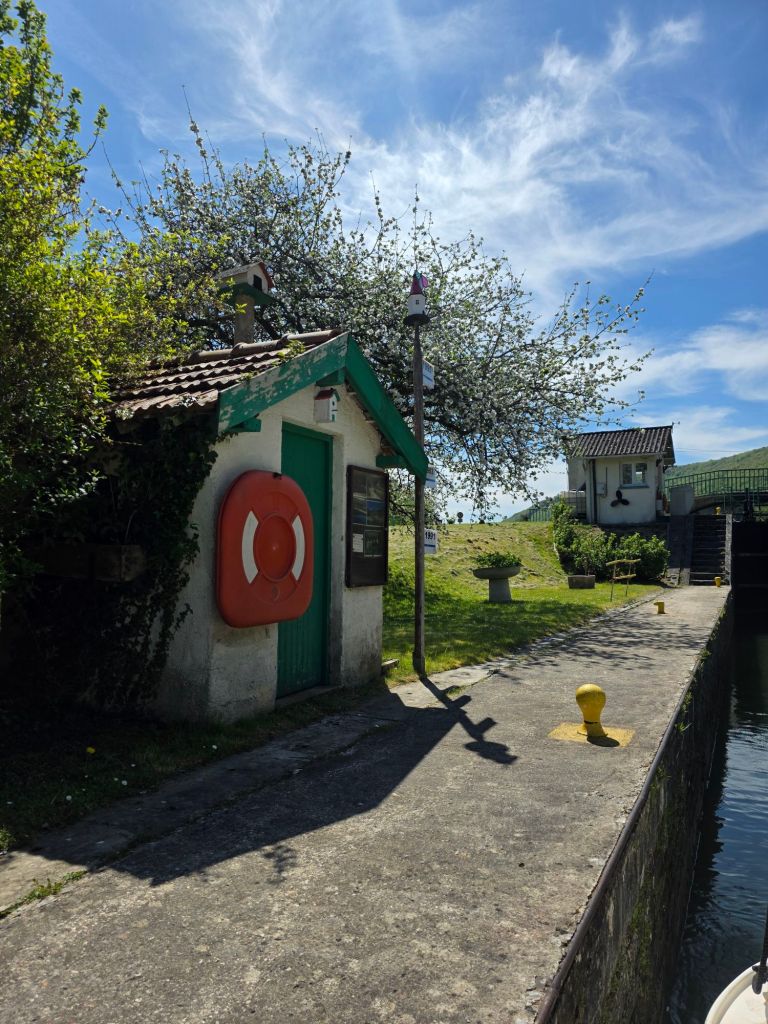
The locks in the French section were small. Enough room for 2 boats of our size at once. The lock was activated by remote control from our boat, this set off the operation sequence which saw us several meters lower on the other side. The lights showed a green and red. This meant that the lock was being prepared. The gates were shut, the chamber needed to fill up with water. Once full, the gates opened and the red light went out leaving only green, we were good to go. Once inside the chamber we loop our bow line onto one of the huge bollards. Careful not to tie off otherwise we would be “hung up” hanging down the wall with no water – not the best seamanship! There is a ladder inside the chamber which is the full depth of the lock. Inside the ladder cavity are 2 poles. Once we were ready, we could push the blue pole up (never touch the red one, we were told, this is for emergencies). The alarm sounds and the gates close behind us. We must let the line out as we descend and the boat, along with the water level drop. Once the water is at the same level as the canal on the other side, the bottom gates open, we release the lines and putt-putt out and carry on our way. Some of the chambers are really deep. The walls are slimy and green. We start to wonder how we are going to navigate back up, where do we tie the ropes? We will have to figure that out when we get there.
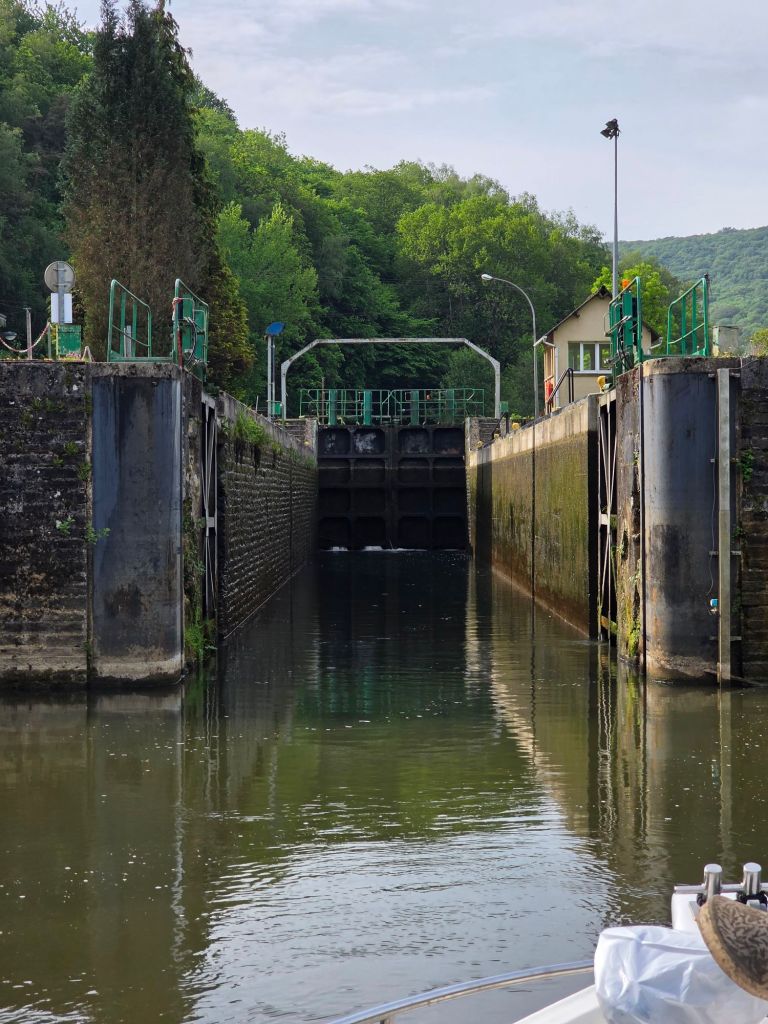
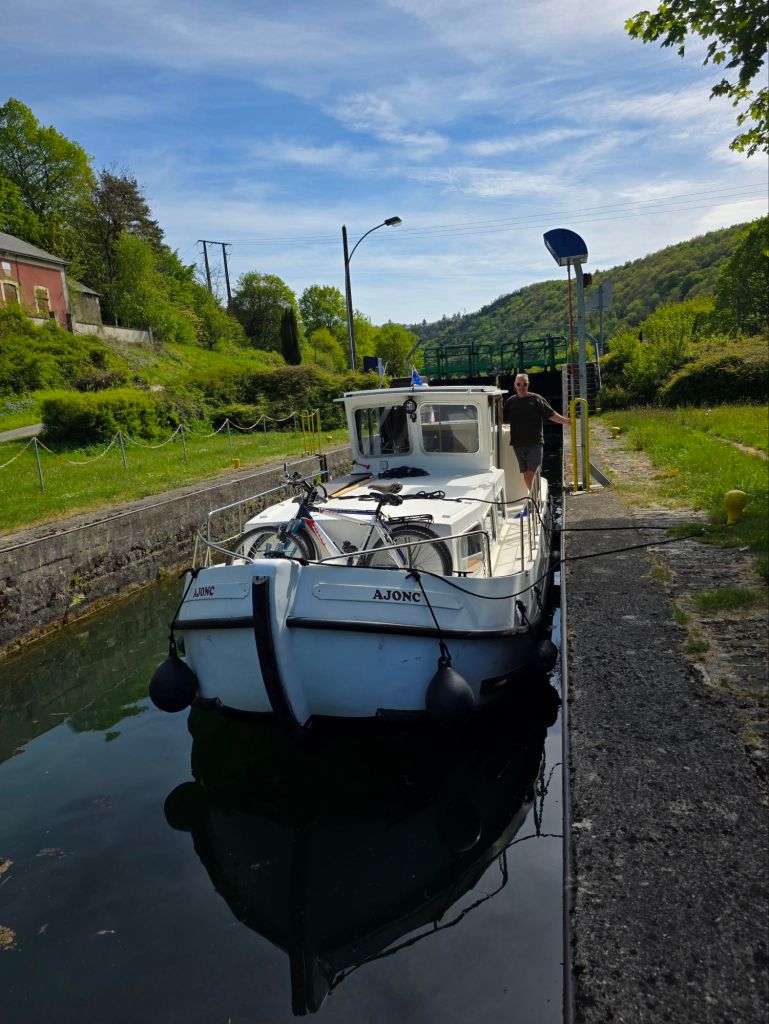
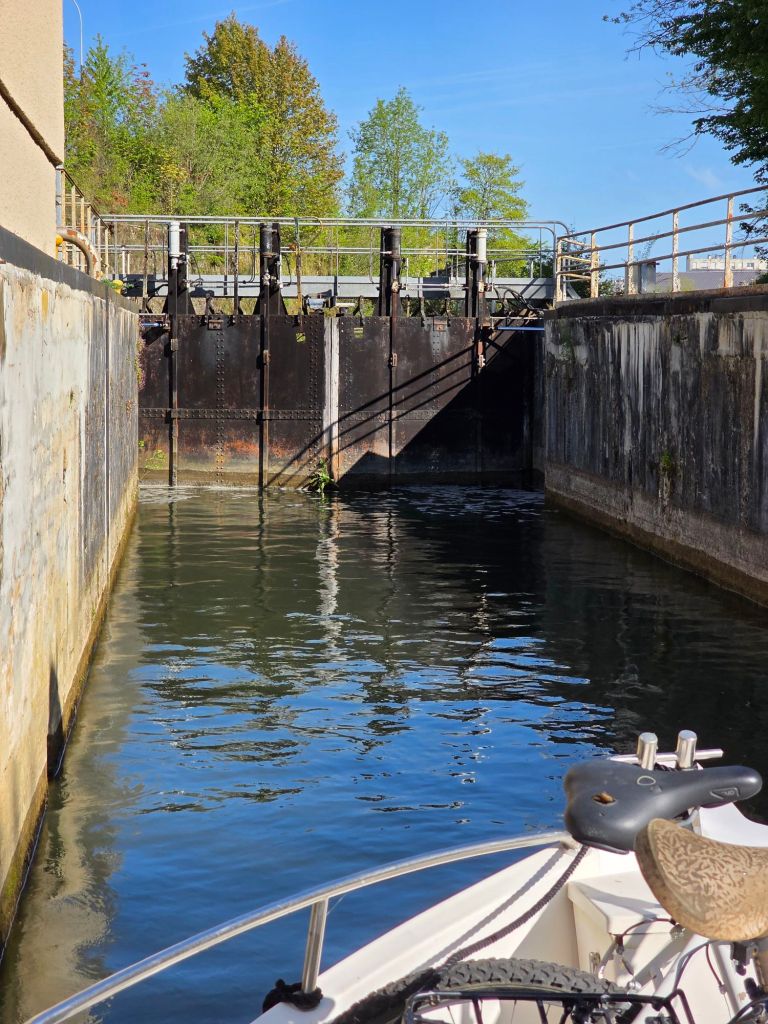
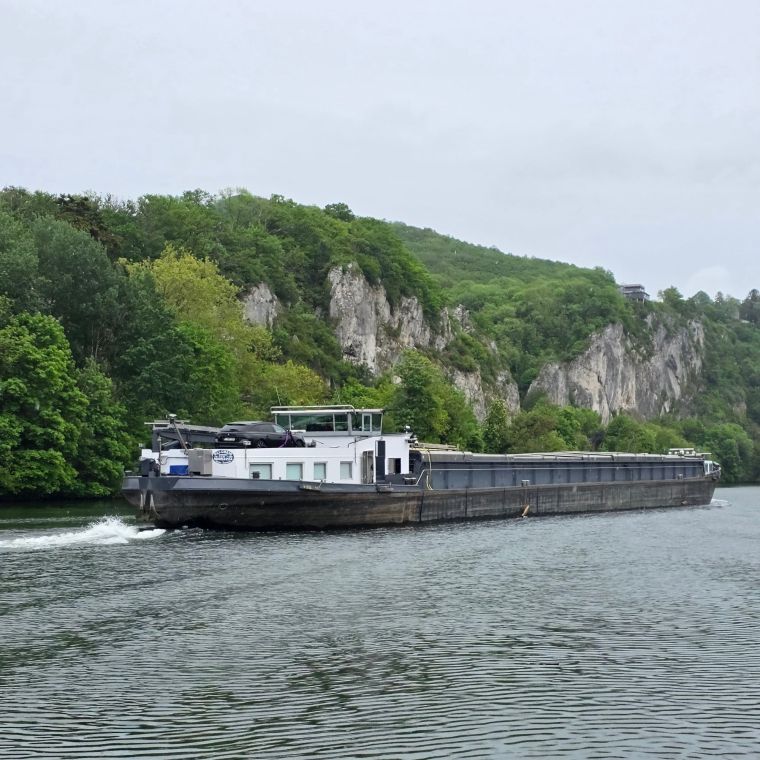
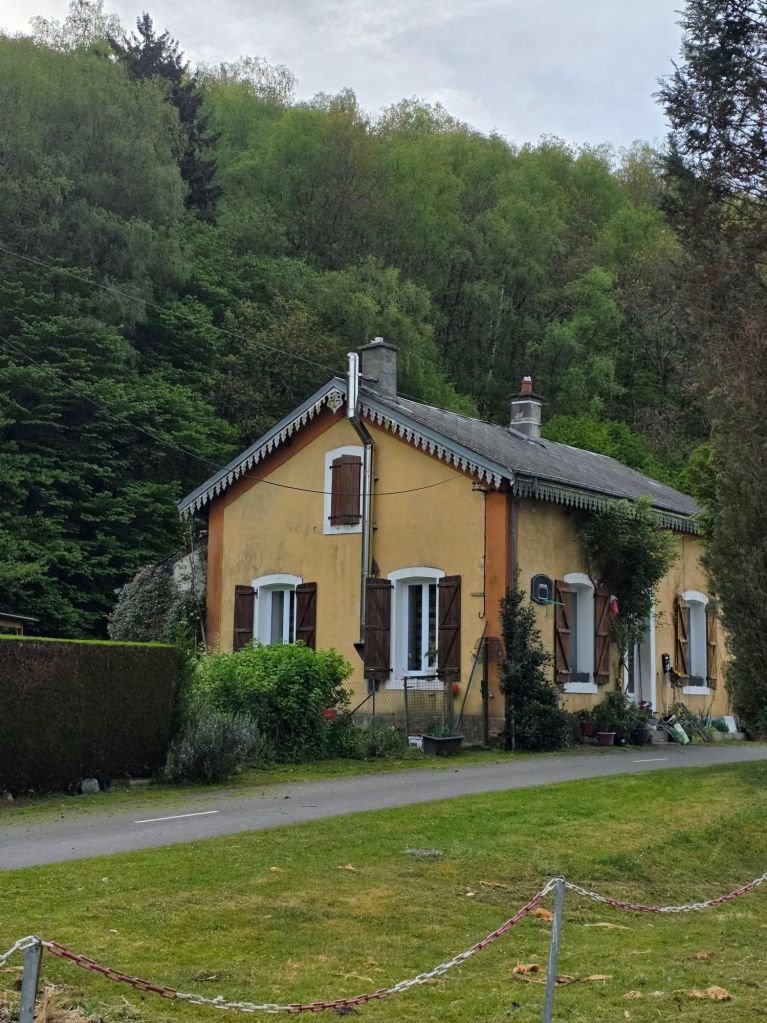
Once we entered Belgium there was commercial traffic on the river. This meant that the locks had to be a lot bigger. These locks were operated by a lock keeper. I have decided that this is the job for me, I would love to be a lock keeper in Belgium. It would be like being a lighthouse keeper, but not so remote. As you approach these locks you are supposed to use you VHF radio to let them know you have arrived. We don’t have a VFH radio on board. Being such a little boat, often the keepers did not see us coming. We would wait and wait. Often, we had to tie up alongside before the lock and take a walk to the keepers house. They were mostly very friendly and would activate the lock and away we would go.
Going up turned out to be not as hard as we thought. There were tie off points along the walls inside the chamber and you could also tie off on the ladder wrungs. We had to use bow and stern lines in the big locks. Once the gates were closed and the water was released, there was quite a pressure wave coming right at us. As the water filled the chamber, we had to hold the rope tight to keep the boat alongside but let it out at the same time so that the boat could go up with the water. On the very deep locks, we had to do a quick change in the middle of the flood to re-loop the rope up higher as it was now way below the boat.
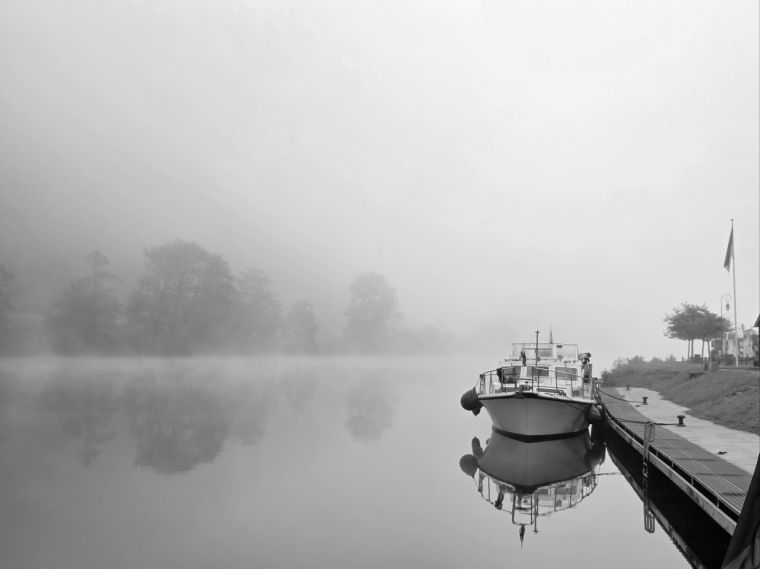
We had enough diesel onboard to take us the distance we wanted to go. There was 250 litres of water onboard. We had a book which showed where all the jetties were and where we could get water or tie up and use power – just like a camper van on the water. This was mid-April into May, the summer season had only just begun. This meant that the Capitaine was often not there, so, free to stay – but, no power or water. We managed well with no power, we had plenty of battery power and gas for cooking, but water was a bit of a problem. There were a couple of days where we ran out and had to use bottled water.
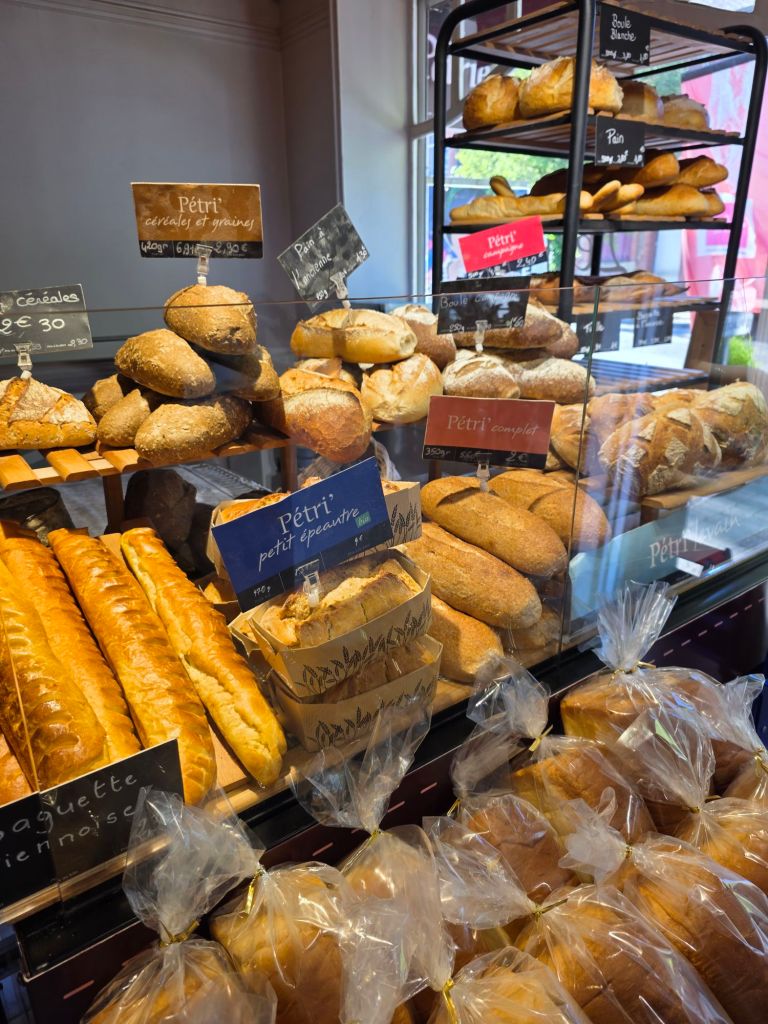
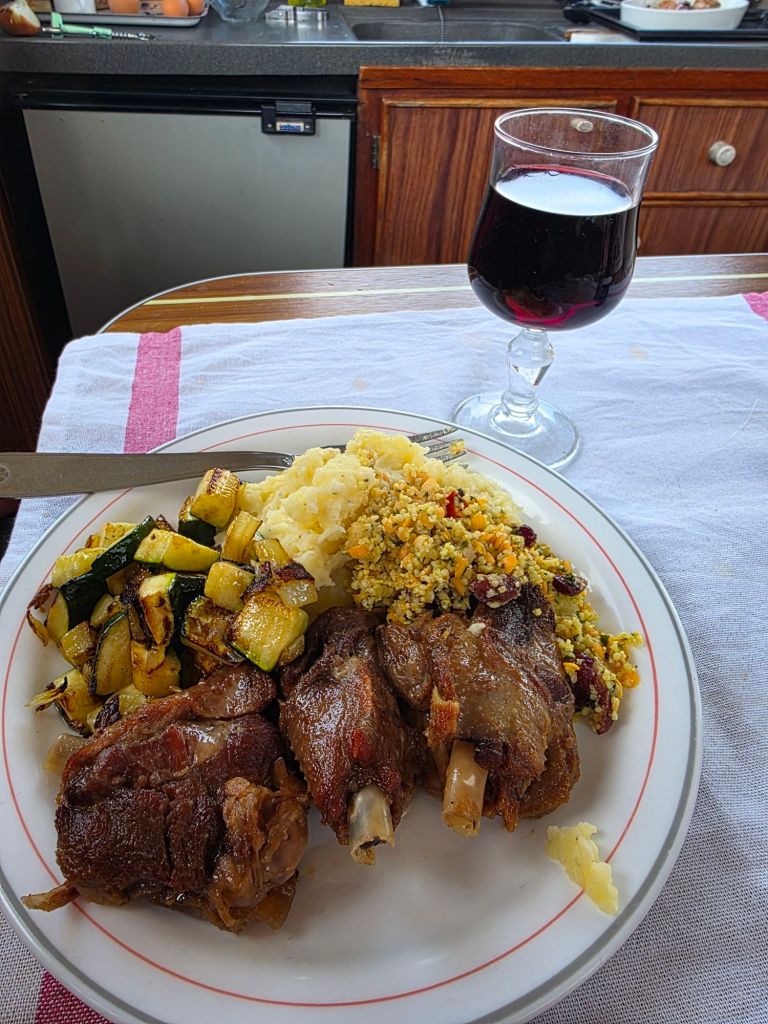
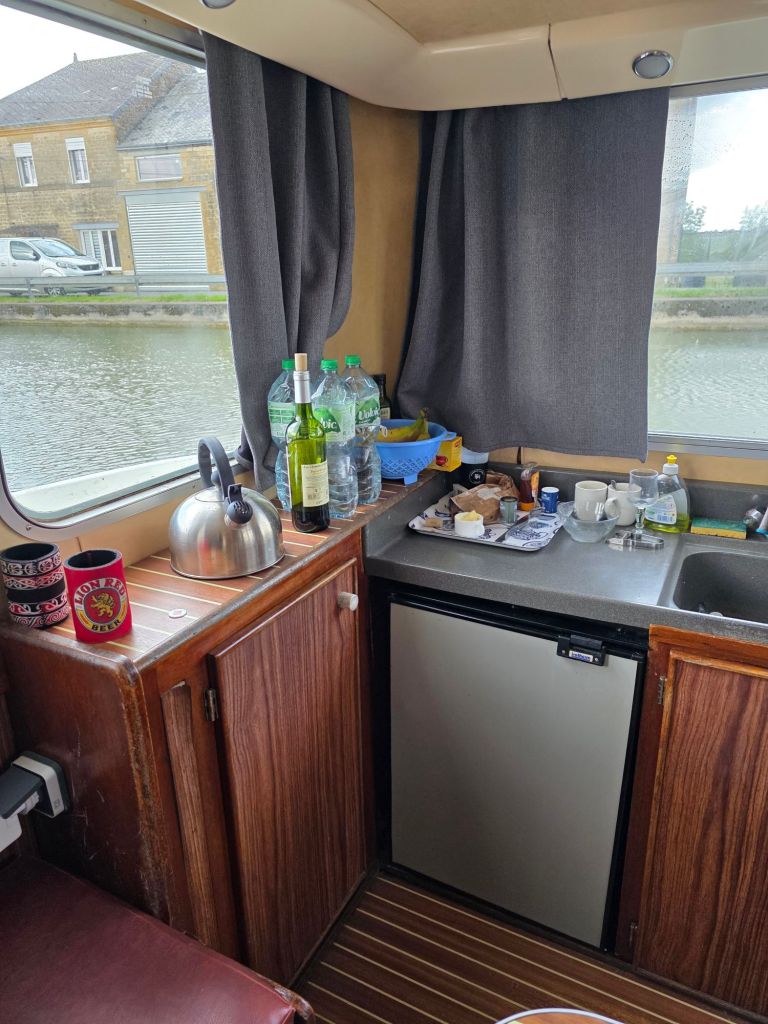
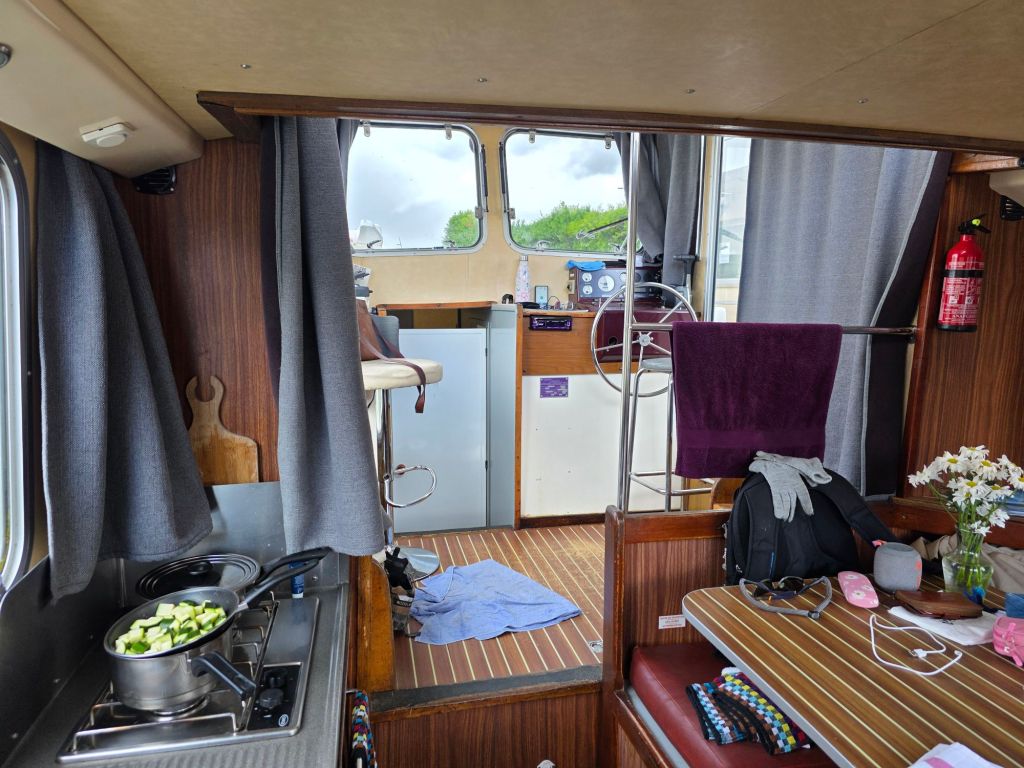
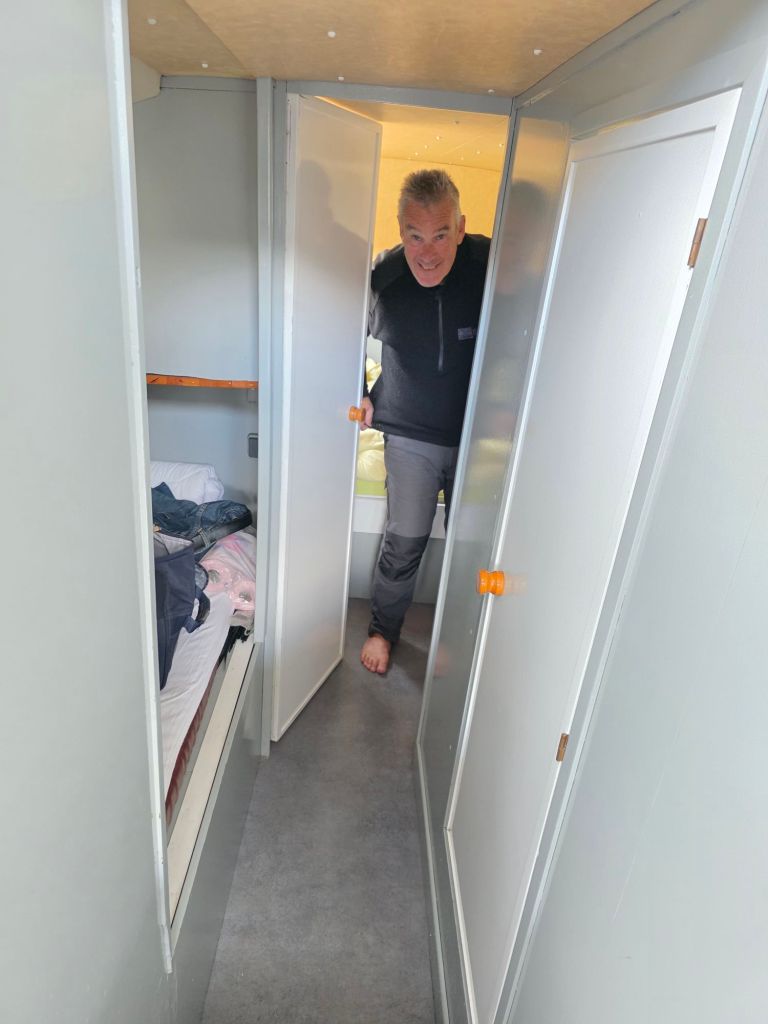
The boat was well thought out and well provisioned. There was everything you could need in the galley. 2 burner gas cooker and a gas oven. Fridge, coffee filters, cork screw – yes they still have corks in their wine bottles in this part of the world! All crockery and cutlery, pots and oven dishes. We cooked most nights and created amazing meals. Confit of duck one night! Safe as to say, we did not miss out on anything! We visited the patisseries most mornings when there was one and ate the best bread and pastries in the world, paired with the most delicious cheese.
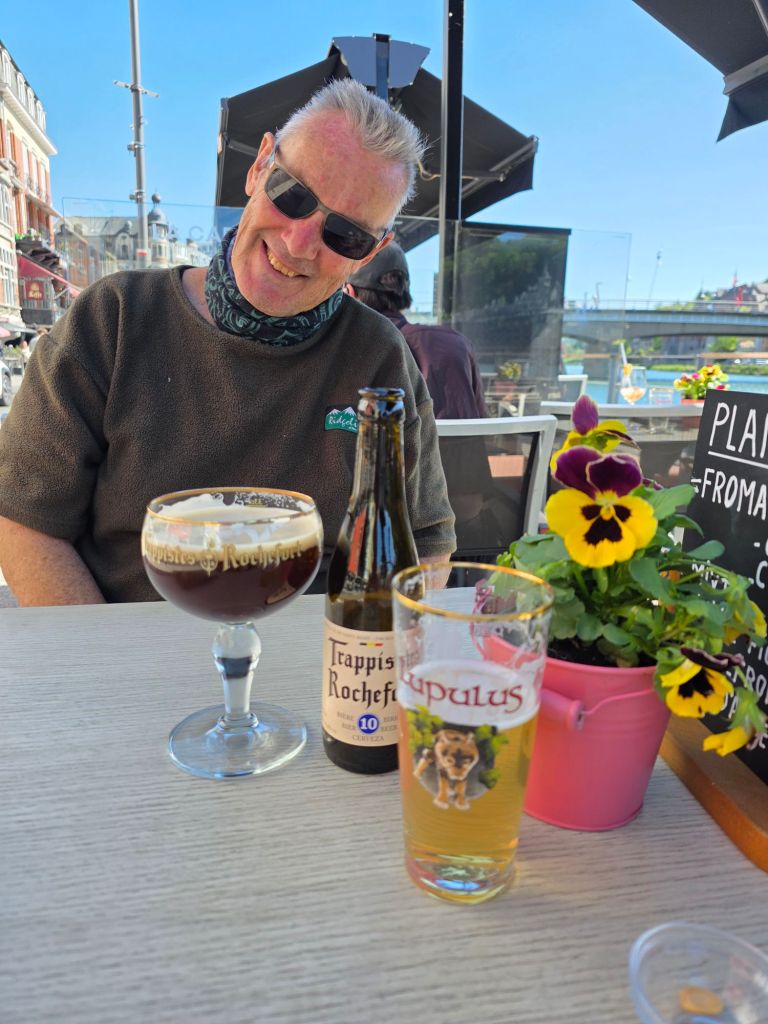
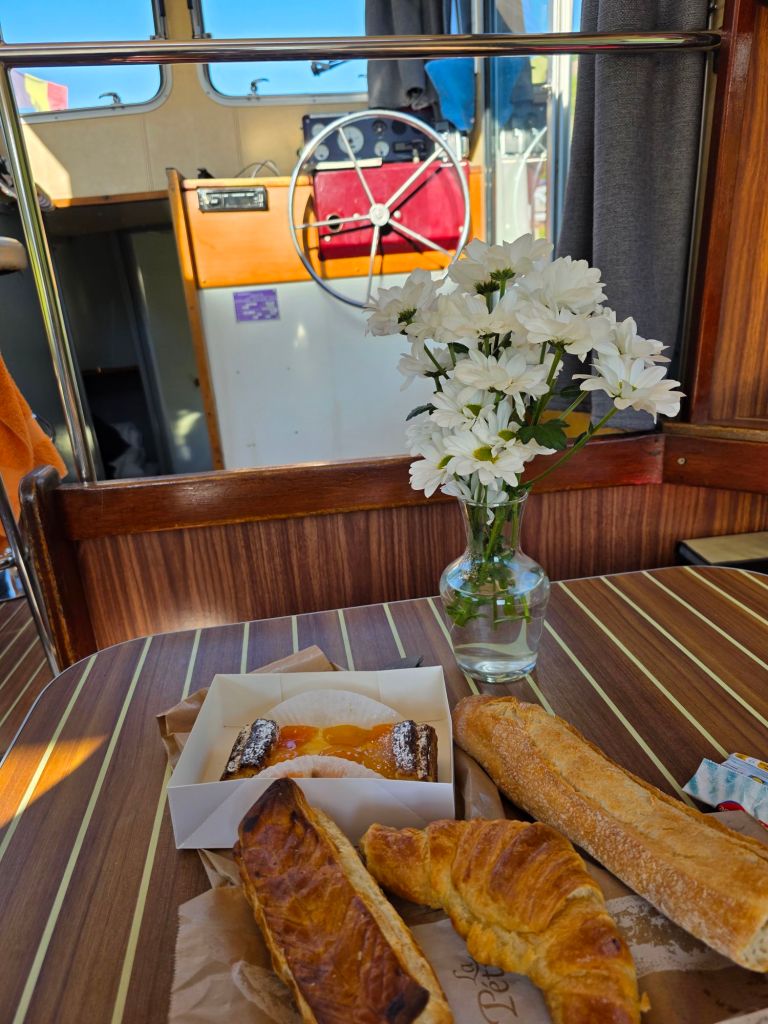
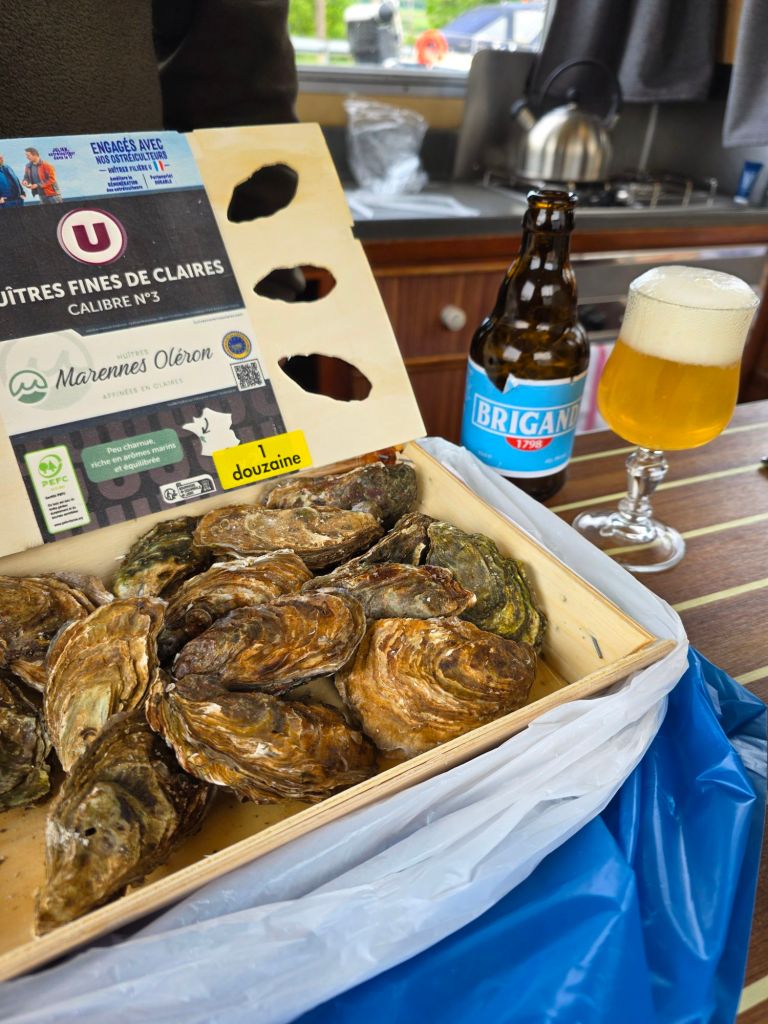
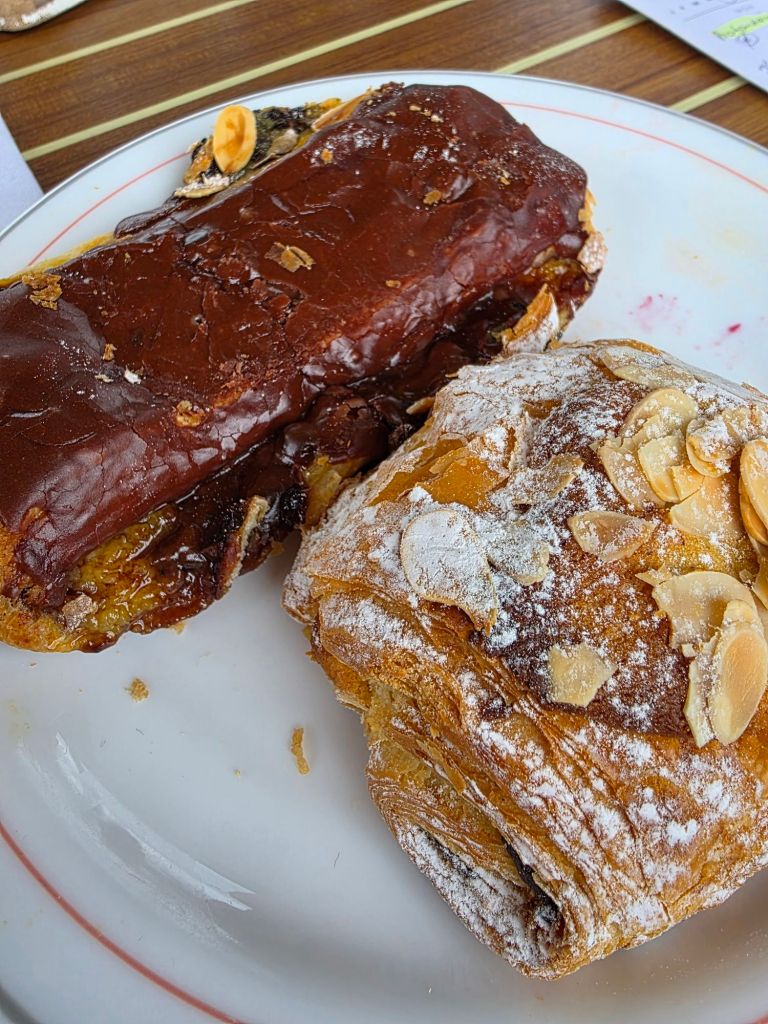
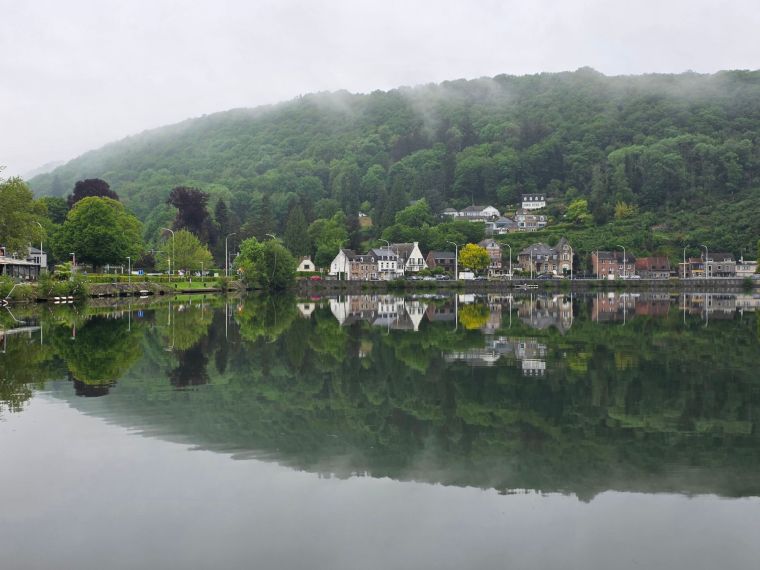
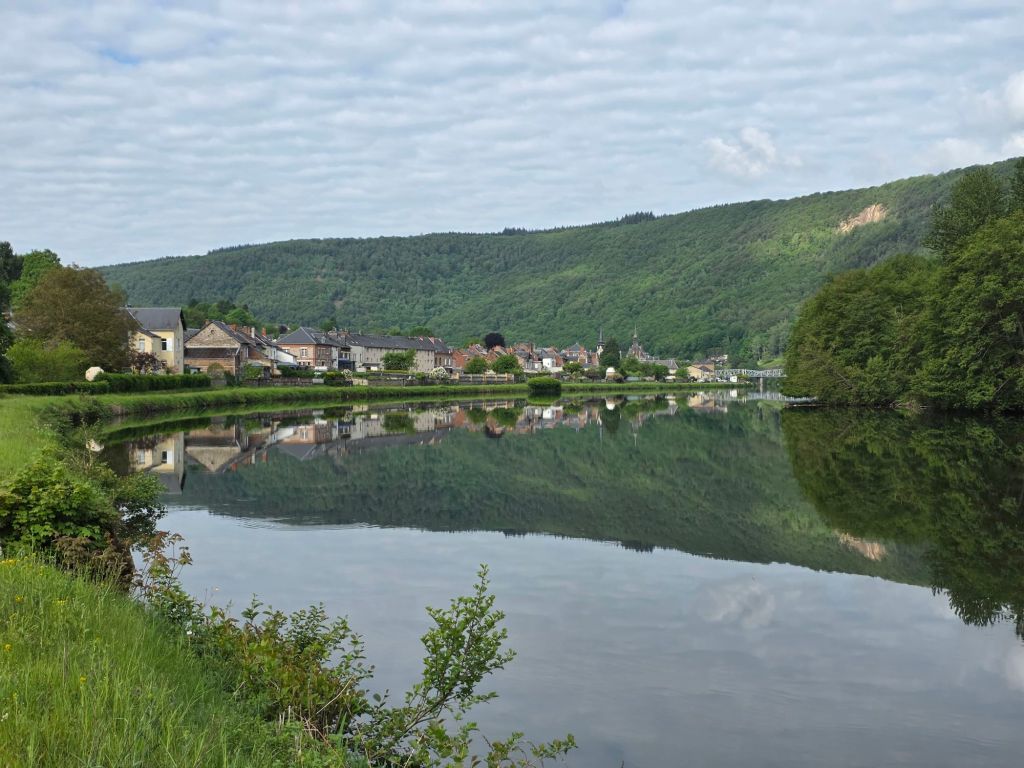
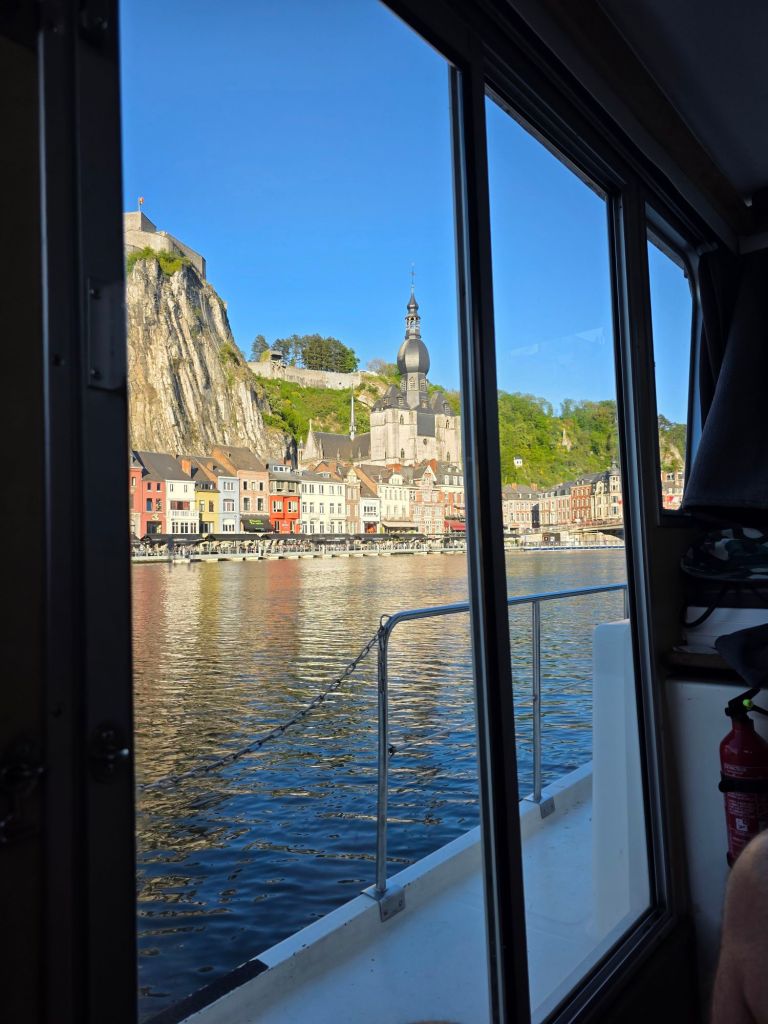
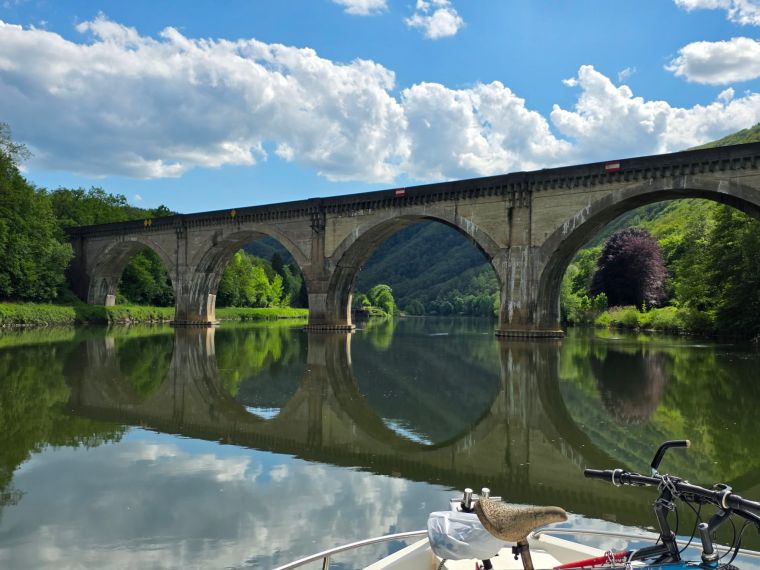
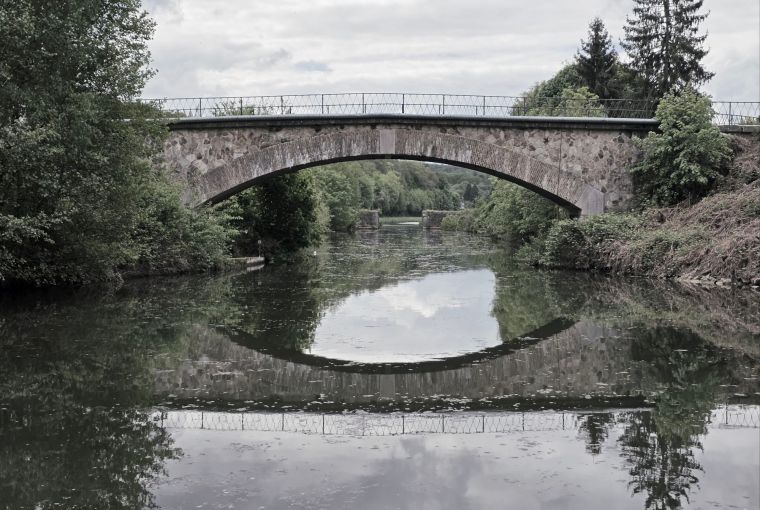
There were some very beautiful villages along the way. We stopped for a few days at some places that we particularly liked. The countryside changed quite a bit from start to finish. Beautiful green fields and wide-open spaces to sheer cliffs and sharp jagged points. So many bridges, everything from motorway traffic and trains to small foot bridges. It is a very pretty part of the world.
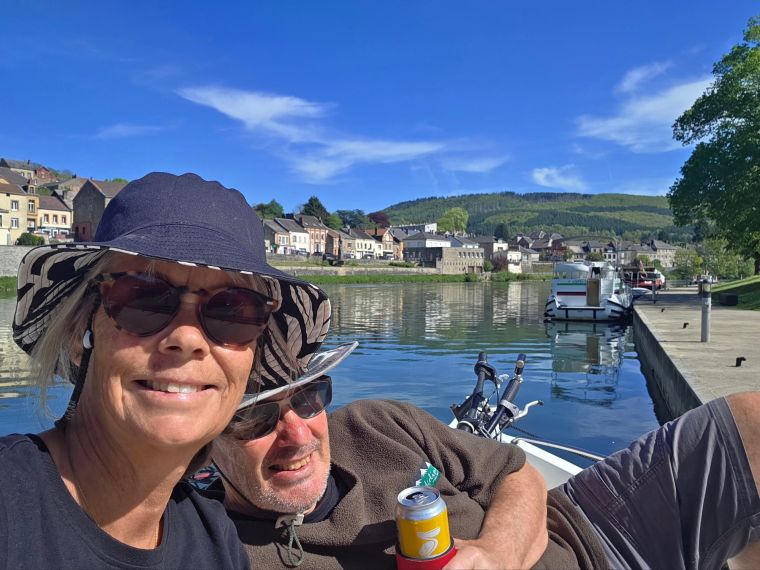
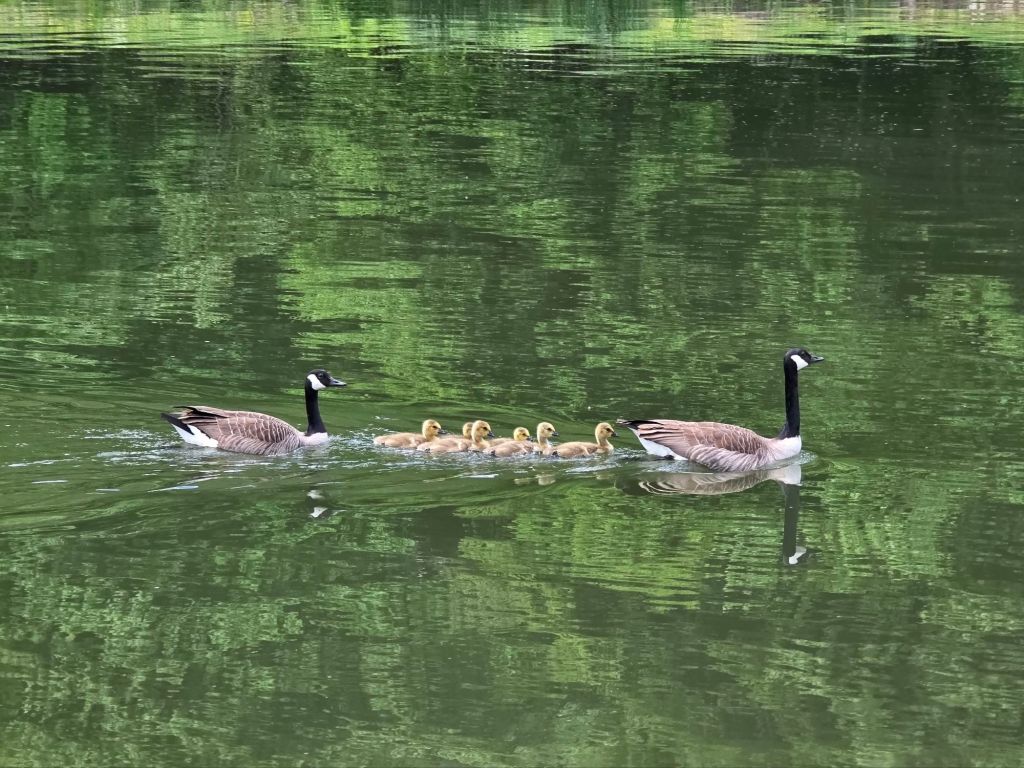
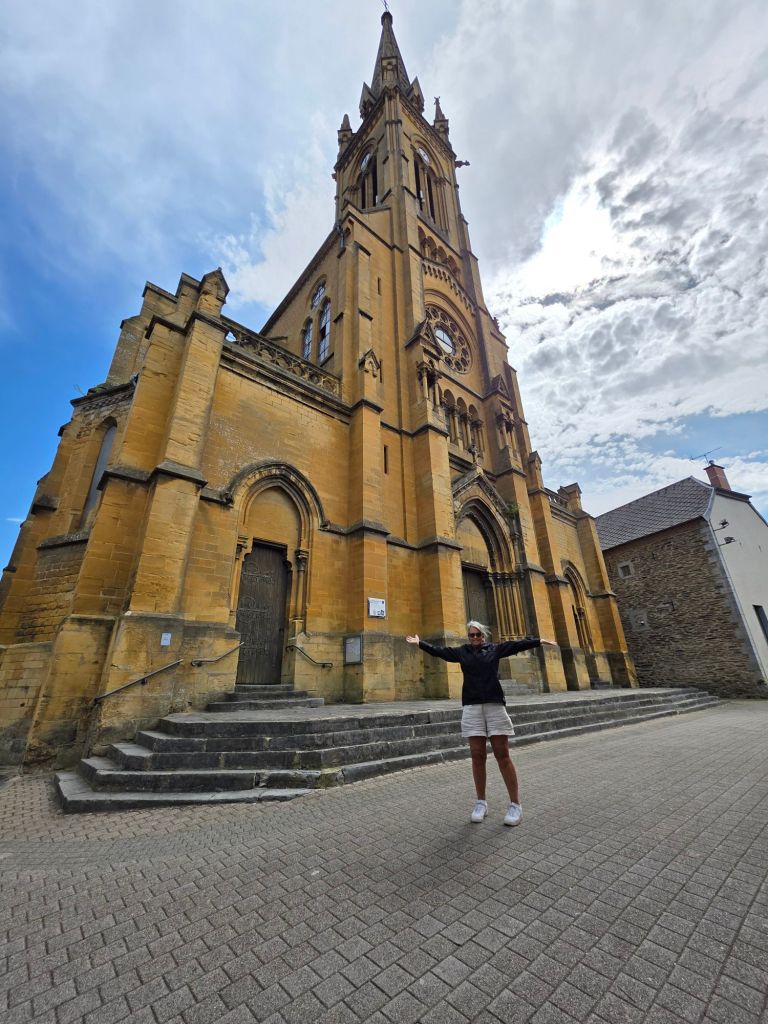
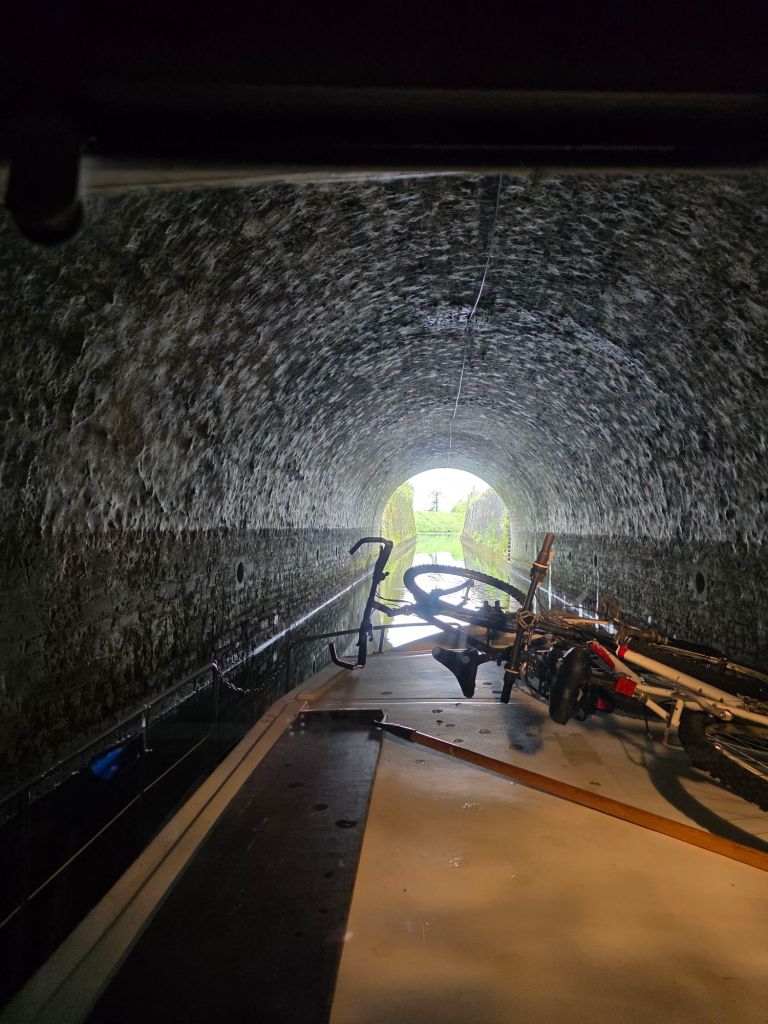
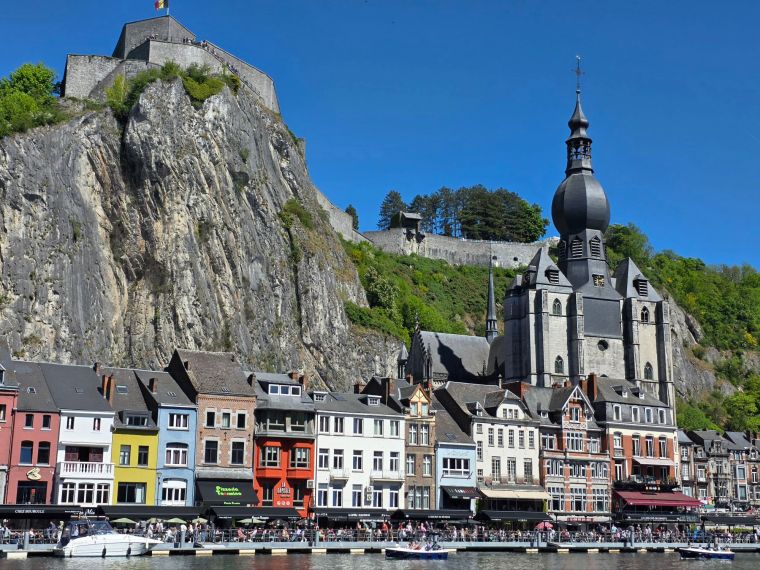
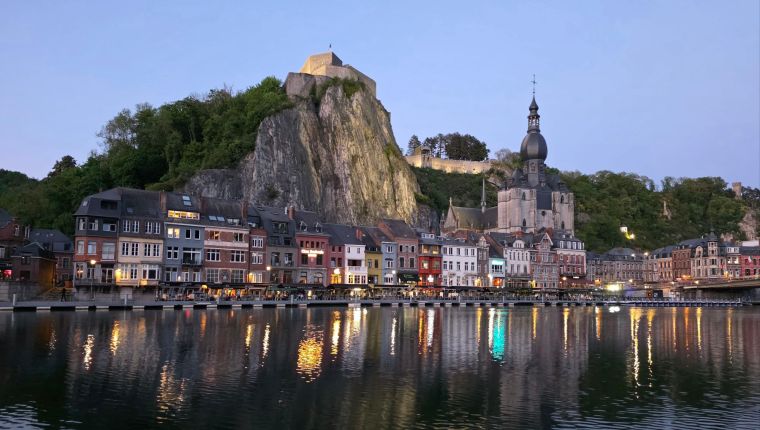
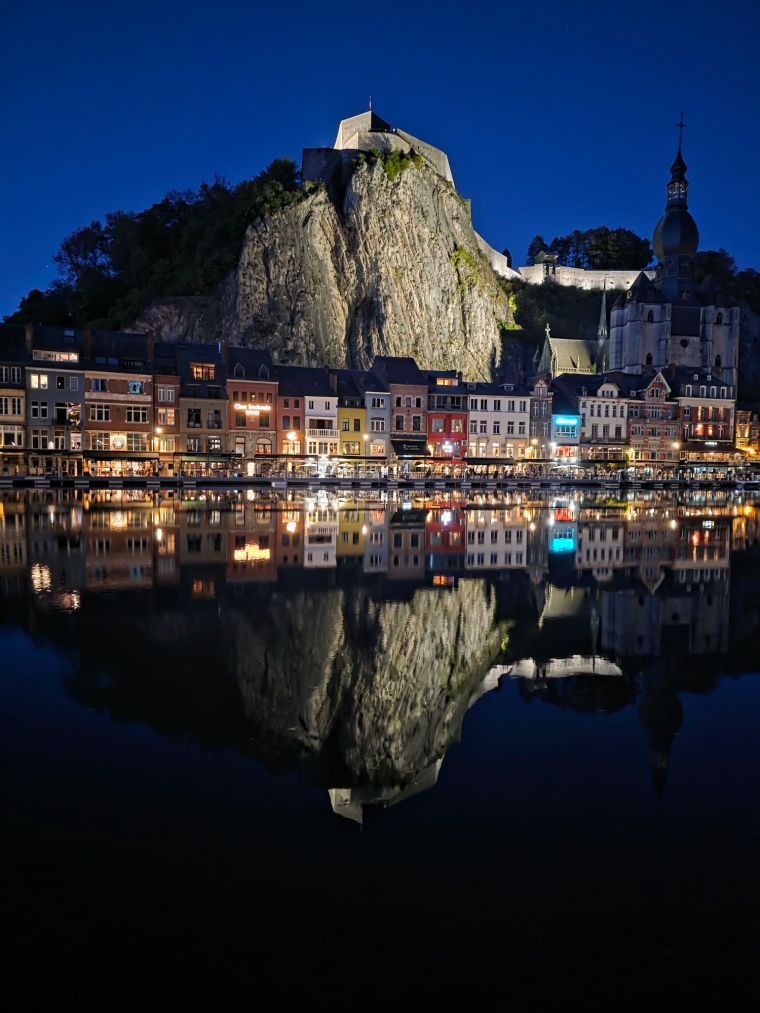
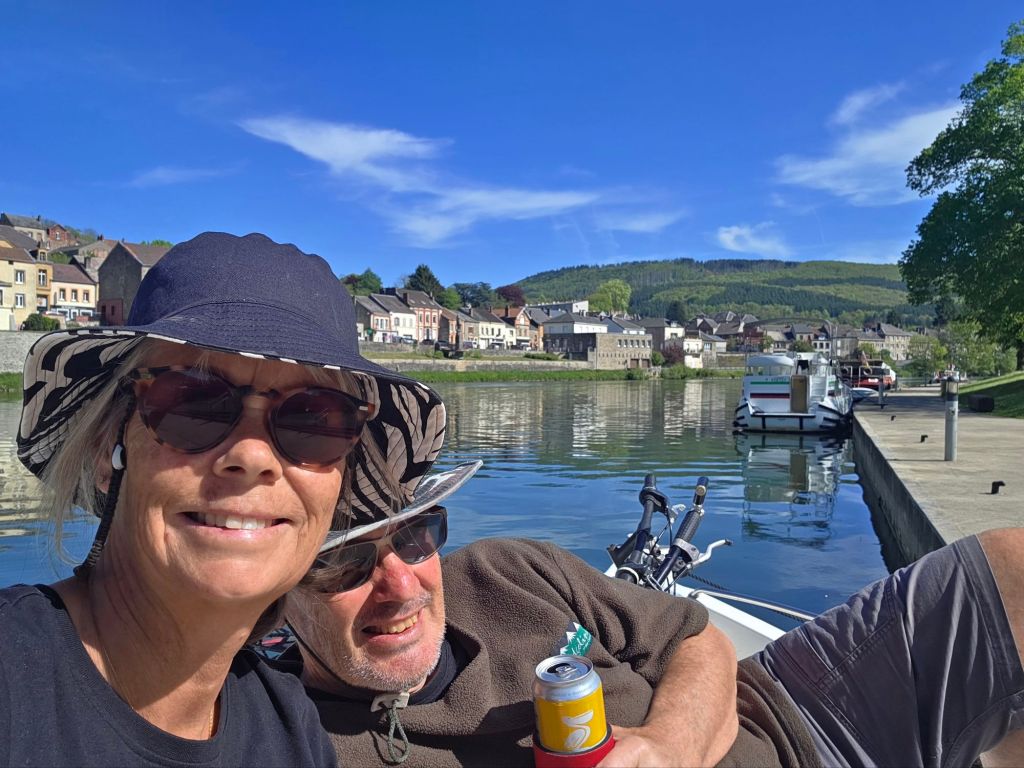
We had a fabulous 3 weeks. This was a bucket list item and it did not disappoint. The weather was fantastic for the first week then the temperature plummeted. We were very glad we had brought warm clothes and rain coats. It came good again by the time we finished. 3 weeks you are sure to get all weather eh!
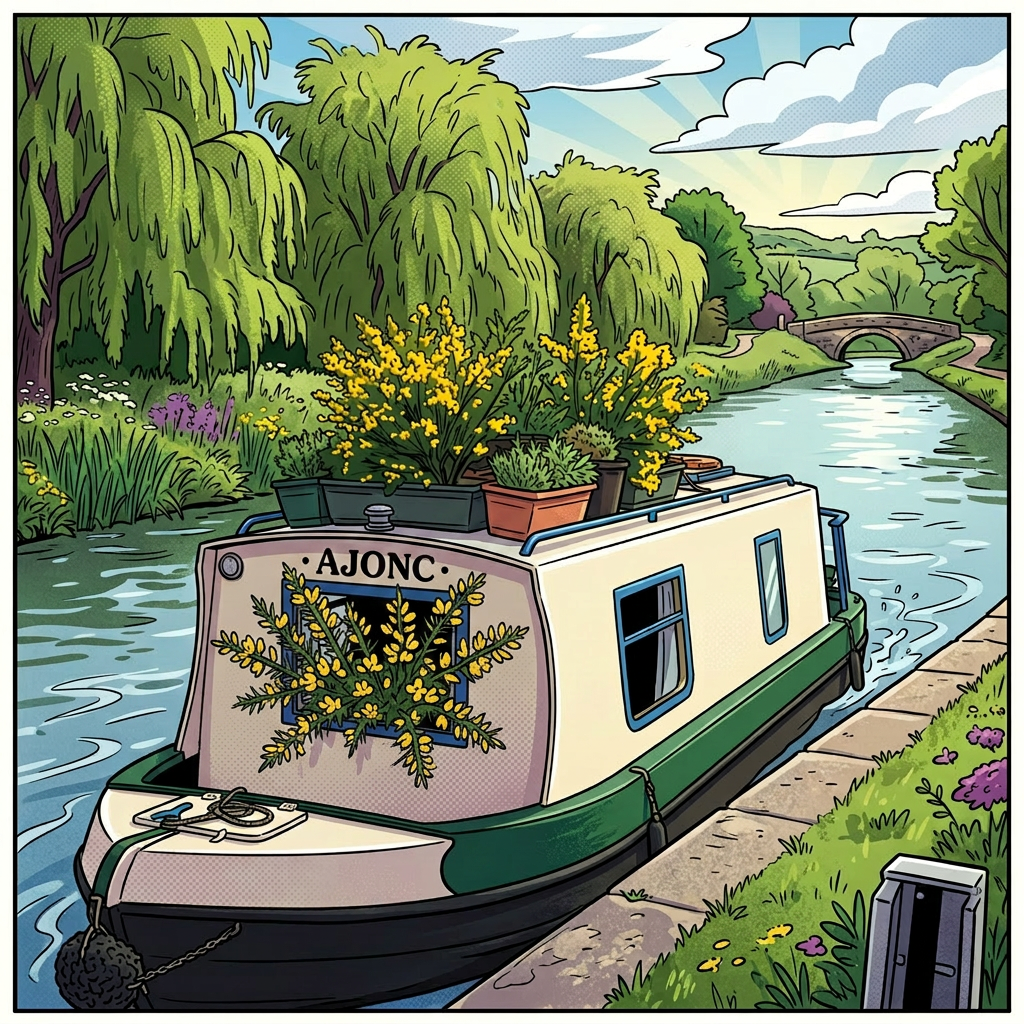
PS Our friend Wayne in New Zealand was curious about her name and discovered that it translates to “gorse”
Thank you for reading our story!